





What's Happening?
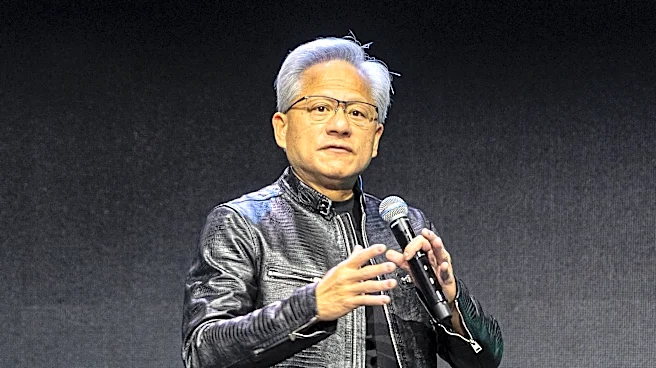
Nvidia's shares experienced a 5% decline on Tuesday, following a 30% rally on Monday that was triggered by the reinstatement of Jensen Huang as CEO. Huang's return was unanimously approved by the company's board of directors after a series of discussions.
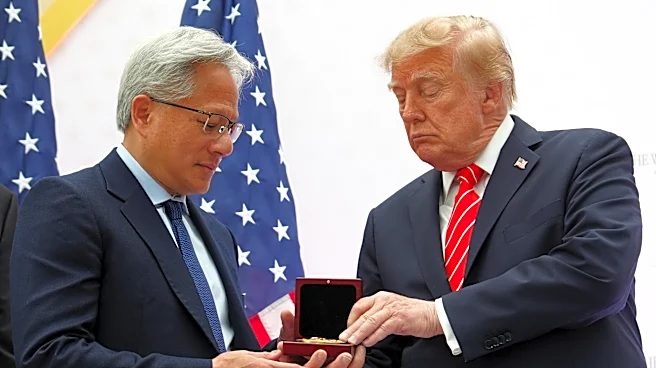
President Trump stated his personal involvement in Huang's return, indicating that Nvidia's board sought assurances that Huang, who had resigned less than two weeks prior, did not pose a threat to national security. President Trump affirmed, “We believe he’s fine. He’s absolutely fine.” Huang expressed his honor and renewed commitment to leading Nvidia, thanking the board, employees, shareholders, and his family. Harvey C. Jones, Chair of the Board, affirmed the board's confidence in Huang's leadership.
Why It's Important?
The involvement of President Trump in the CEO's return and the national security assurances sought by Nvidia's board underscore the increasing geopolitical significance of technology companies, particularly those at the forefront of artificial intelligence and semiconductor development. Nvidia's leadership is not merely a corporate governance issue but has broader implications for U.S. technological competitiveness and national security. The initial rally and subsequent retreat in share prices reflect investor sensitivity to leadership stability and the perceived political climate surrounding key tech figures. This event highlights how the U.S. government is actively monitoring and potentially influencing leadership decisions within critical technology sectors to safeguard national interests, impacting investor confidence and market dynamics.
What's Next?
Jensen Huang is scheduled to appear before the House Foreign Affairs Committee next week, indicating continued scrutiny from U.S. lawmakers regarding his role and Nvidia's operations. This appearance will likely involve questions related to national security, international technology competition, and the company's strategic direction. The outcome of this hearing could further influence investor sentiment and potentially lead to policy discussions affecting the broader semiconductor and AI industries. Nvidia will need to navigate these political waters carefully to maintain stability and focus on its technological advancements. The company's performance and strategic decisions will be closely watched by investors, policymakers, and competitors alike.
Beyond the Headlines
The episode surrounding Jensen Huang's brief resignation and subsequent reinstatement, coupled with President Trump's involvement, reveals a deeper intertwining of corporate leadership, national security, and political influence in the U.S. technology sector. It suggests that for companies deemed critical to national interests, leadership changes can become matters of state concern, moving beyond traditional corporate governance. This trend could lead to increased government oversight or influence in the selection of executives in strategic industries. It also raises questions about the balance between corporate autonomy and national security imperatives, potentially setting a precedent for how the U.S. government engages with other key technology firms in the future. The incident underscores the evolving landscape where economic power and technological prowess are increasingly viewed through a national security lens.