
What's Happening?
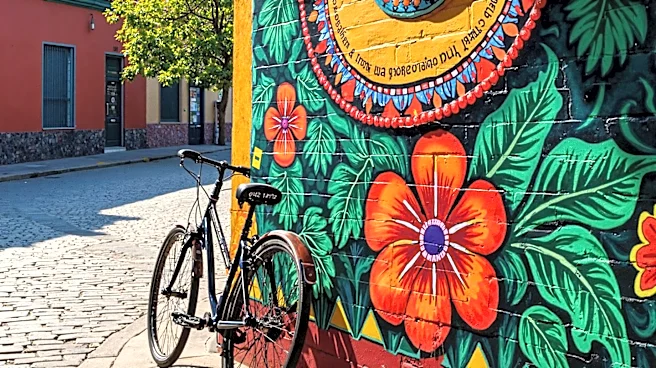
San Antonio artist Albert Gonzales is actively engaged in his 'Wabi Sabi Street Art Project,' which involves placing cardboard flower blossoms on abandoned buildings throughout the city. These works are inspired by the Japanese concept of Wabi-sabi, which values
beauty in imperfection. Since 2019, Gonzales has been attaching these cardboard creations with industrial Velcro, aiming to install them in every zip code in San Antonio. He documents this ongoing project through photographs, with aspirations of compiling them into a book. In addition to his public street art, Gonzales's distinctive flower pieces are also featured in commissioned murals for businesses and homes, as well as in formal exhibition spaces. His work can be seen in galleries and private collections, including an exhibit at the Palmetto Center for the Arts at Northwest Vista College and a section of the 'Tejano Legacy: Another American Origin Story' exhibit at the Briscoe Western Art Museum. The Alamo Colleges District has also acquired one of his pieces and commissioned him for design work.
Why It's Important?
Albert Gonzales's project is significant for its innovative approach to making art accessible to the public, challenging traditional gallery settings. By placing his Wabi-sabi inspired murals on abandoned buildings, he highlights the sentimental value of these often-overlooked structures and brings beauty to everyday urban landscapes. This initiative fosters community engagement by integrating art directly into neighborhoods, making it available to a broader audience who might not typically visit art institutions. His work also serves as an inspiration for aspiring artists, particularly in underserved communities, by demonstrating that art can be a viable career path. The project's documentation and potential book aim to preserve the ephemeral nature of street art and contribute to the cultural narrative of San Antonio. Furthermore, the Wabi-sabi philosophy embedded in his art encourages a deeper appreciation for natural processes, transience, and the inherent beauty found in flaws, offering a contemplative perspective within the bustling city.
What's Next?
Albert Gonzales plans to continue expanding his 'Wabi Sabi Street Art Project' with the goal of placing his cardboard flower murals in every zip code across San Antonio. He will persist in documenting these installations through photography, with the long-term objective of publishing a book that chronicles the project. Gonzales also intends to maintain his presence in both public art spaces and formal exhibitions, as evidenced by his current and past gallery showings. He will likely continue to engage with the community through public art installations and interactions, such as setting up easels in public areas to work and connect with passers-by. His ongoing collaborations with institutions like the Alamo Colleges District suggest future commissioned works and partnerships. Additionally, Gonzales aims to inspire younger generations by making art visible and accessible in their communities, potentially leading to workshops or educational initiatives.
Beyond the Headlines
Beyond the immediate visual impact, Albert Gonzales's Wabi-sabi project delves into profound themes of urban decay, memory, and resilience. By adorning abandoned buildings with his art, he subtly reclaims and recontextualizes these spaces, transforming symbols of neglect into canvases for beauty and reflection. This act encourages viewers to reconsider their environment and find aesthetic value in the transient and imperfect. The Wabi-sabi philosophy itself, emphasizing the beauty of imperfection and impermanence, offers a counter-narrative to consumerism and the pursuit of flawless aesthetics, promoting a more mindful and appreciative way of engaging with the world. Gonzales's personal journey, from a challenging past to a dedicated artist, adds another layer of meaning, highlighting the transformative power of art and passion. His commitment to making art accessible also addresses socio-economic barriers, democratizing art and fostering a sense of cultural ownership within diverse communities.