






What's Happening?
Volta, an AI cloud startup, has announced a $10 billion strategic partnership with an AI lab to build an AI factory in Norway. This partnership is reportedly with Anthropic, a model developer giant, which seeks to utilize Volta's compute resources over
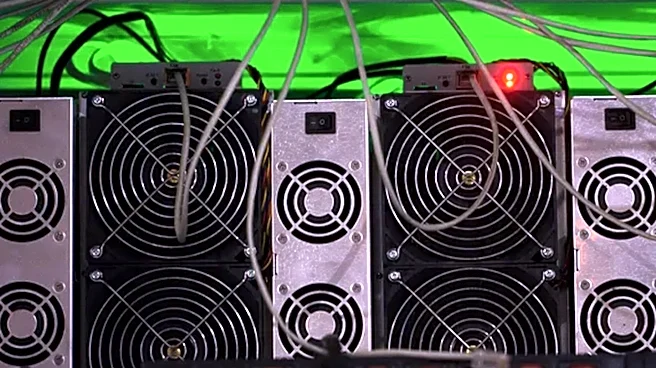
a six-year period. Volta, emerging from stealth mode, has raised approximately $300 million in seed and Series A rounds, reaching a valuation of $2.4 billion. The funding rounds were led by Andreessen Horowitz and Nvidia, with additional investment from Michael Dell's family office. Volta aims to develop a 133 MW facility in collaboration with cryptocurrency miner and GPU cloud operator Bitdeer, using Nvidia Vera Rubin systems. The Norway project is part of Volta's broader development pipeline, which plans to exceed 1 GW of capacity across North America and Europe.
Why It's Important?
This development signifies a major investment in AI infrastructure, highlighting the growing demand for AI compute resources. The partnership with Anthropic underscores the strategic importance of AI in various sectors, including technology and defense. For Volta, this deal positions the company as a significant player in the AI infrastructure market, potentially accelerating its growth and market presence. The involvement of major investors like Andreessen Horowitz and Nvidia further validates the potential of AI infrastructure as a lucrative investment opportunity. This move could also influence other tech companies to invest in similar AI infrastructure projects, potentially reshaping the competitive landscape in the AI sector.
What's Next?
Volta plans to continue its expansion by developing additional AI factories across North America and Europe. The company intends to use Nvidia's DSX reference architecture and software tooling for these projects, which include digital twins for facility modeling. As the AI infrastructure market grows, Volta may seek further partnerships and investments to enhance its capabilities and market reach. The success of this project could lead to increased interest from other AI labs and tech companies looking to secure compute resources, potentially leading to more strategic partnerships and collaborations in the industry.