








What's Happening?
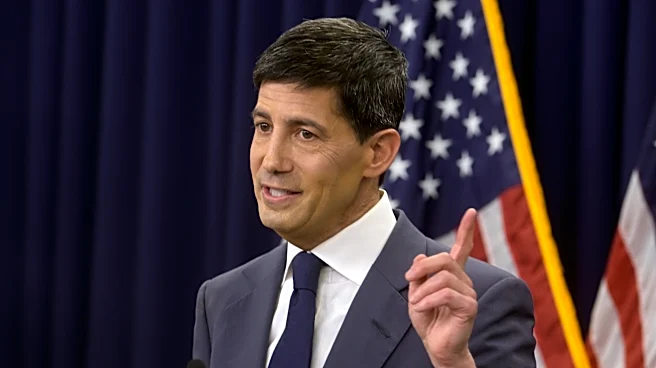
Kevin Warsh, the new Chairman of the Federal Reserve, has introduced significant changes to the Federal Open Market Committee's (FOMC) statement following a recent meeting. The statement was notably shorter, containing around 130 words compared to over
300 in previous meetings. Warsh emphasized a shift away from providing forward guidance, stating that it is not suitable for the current policy environment. This marks a departure from the practices under former Chairman Jerome Powell, where detailed voting records and inflation outlooks were standard. Warsh's approach aims to simplify communication and focus on delivering factual information without extensive projections.
Why It's Important?
The changes introduced by Warsh could have significant implications for financial markets and economic policy. By reducing forward guidance, the Federal Reserve may influence how markets interpret economic data and adjust expectations. This shift could lead to increased market volatility as investors and analysts adapt to the new communication style. Additionally, Warsh's approach may impact how the Fed's policy decisions are perceived, potentially affecting confidence in the central bank's ability to manage economic stability. The move signals a potential shift in the Fed's strategy, which could influence monetary policy and economic outcomes in the U.S.
What's Next?
As Warsh continues to implement his vision for the Federal Reserve, stakeholders will be closely monitoring the impact of these changes. The financial community may need to adjust to the lack of forward guidance, which could lead to more reliance on real-time economic data. Future FOMC meetings and statements will be scrutinized for further changes in communication and policy direction. Warsh's leadership style and decisions will likely shape the Fed's approach to managing inflation and economic growth, with potential implications for interest rates and financial stability.