





What's Happening?
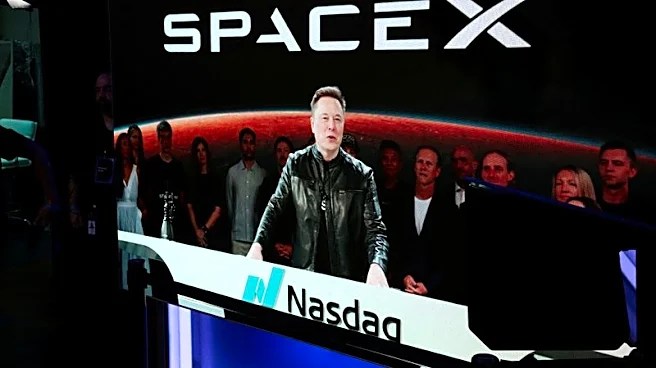
Investor Michael Burry, known for predicting the 2008 housing crash, is signaling that the current surge in IPOs from major tech companies like SpaceX, Anthropic, and OpenAI indicates a period of 'peak euphoria' in the market. According to Burry's analysis,
presented on the New Money podcast, the combined capital sought by these companies could rival the total raised by approximately 300 internet and tech IPOs in 2000, adjusted for inflation. This level of market supply suggests that company insiders believe current valuations are at their highest potential. US IPO proceeds have reached $147.5 billion through the first three quarters of 2026, surpassing the full-year record of $119 billion set in 2021, despite a 35% year-over-year decrease in the number of deals. This boom is concentrated among a few trillion-dollar private companies rather than a broad speculative rush. A review of about 60 US IPOs over $1 billion in market cap in the past year shows that 35 are unprofitable, and 11 profitable ones trade at over 50 times earnings.
Why It's Important?
Burry's warning carries significant weight due to his past accurate predictions, suggesting that the current IPO environment might be a signal for investors to exercise caution. The concentration of capital in mega-cap listings, rather than a broad market trend, indicates that these large private companies are capitalizing on high valuations to raise substantial funds while minimizing dilution for existing stakeholders. This strategy implies that insiders perceive current market conditions as optimal for selling. The historical data, compiled by University of Florida professor Jay Ritter, shows that IPO volume and dollars tend to rise with the S&P 500 and collapse after market tops, with droughts occurring near market bottoms. This pattern suggests that a flood of new stock offerings often appears near market peaks, acting as a 'thermometer' for market sentiment rather than a precise timing mechanism for a crash. For investors, this means distinguishing between market hype and fundamental value is crucial, as buying into average IPOs at past peaks has historically led to significant losses.
What's Next?
The current trend of mega-listings is expected to continue as companies like Anthropic and OpenAI proceed with their IPOs, aiming for multi-trillion-dollar valuations. Anthropic's offering is reportedly six times oversubscribed, indicating strong demand, though it is also considering limiting participation from China- and Hong Kong-based investors due to geopolitical considerations. These companies are seeking public capital to fund massive expenditures on computing power and infrastructure, as they are currently operating at significant losses. The demand for AI-related infrastructure is driving a capital-spending cycle that is straining corporate balance sheets, with some estimates suggesting AI firms could issue up to $10 trillion in debt over five years. Investors will need to closely monitor the performance of these newly public companies and the broader market's reaction to this influx of supply. The implications for the credit market are also significant, as some AI-related bonds are already yielding high rates, signaling increased risk perception among bondholders.
Beyond the Headlines
The current IPO wave highlights a deeper dynamic in the technology sector: the immense capital requirements for developing advanced AI and related infrastructure. Companies like Anthropic and OpenAI are not going public out of generosity but out of a need to finance their substantial operational costs and expansion plans. This reliance on public markets to fund high-burn businesses raises questions about long-term sustainability and investor expectations. The geopolitical dimension, as seen with Anthropic's potential restrictions on Chinese and Hong Kong investors, underscores how global political tensions are increasingly influencing financial markets and capital flows. Furthermore, the historical correlation between IPO floods and market tops suggests a cyclical nature of investor euphoria and subsequent corrections, prompting a re-evaluation of investment strategies that prioritize fundamental value over speculative growth. The concentration of wealth and opportunity in a few mega-cap tech firms also points to broader economic shifts and potential market imbalances.