

What's Happening?
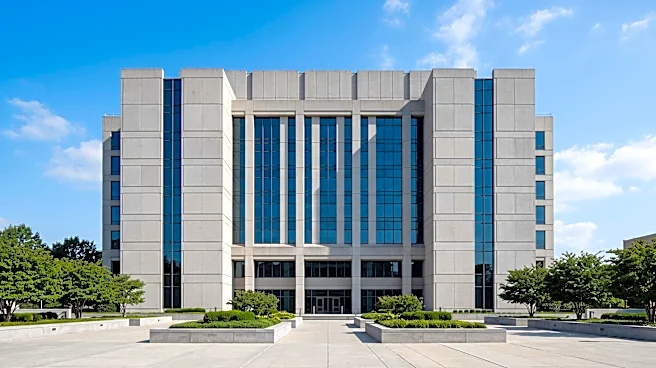
The Jacksonville City Council is set to vote on legislation that would grant 8000-1 LLC a $1.5 million property tax refund, known as a Recapture Enhanced Value (REV) grant, for the redevelopment of the former FBI headquarters in Arlington. The project,
now known as Interra Apartments, faced nearly $13 million in cost overruns due to rising construction expenses and delays since its inception in 2021. The original budget for capital investment was $15.545 million. This new agreement marks the city's second economic development deal for the project, as an initial $820,000 tax refund approved in October 2021 expired before completion. The formerly vacant office building reopened as Interra Apartments in January with 95 market-rate units. Council member Ken Amaro secured support to increase the tax break from an initial $1 million to $1.5 million.
Why It's Important?
This proposed tax break highlights the challenges and incentives involved in urban redevelopment, particularly in economically distressed areas. For Jacksonville, the revitalization of the former FBI building transforms a long-standing eyesore into a functional apartment complex, potentially stimulating further investment and improving the area's aesthetic and economic vitality. However, the increased tax refund and the project's lack of affordable housing have raised concerns among some council members, such as Michael Boylan, regarding the city's return on investment and the broader community benefit. The situation also reflects the impact of rising construction costs and interest rate hikes on real estate development, making such incentives crucial for project viability. The city's willingness to provide a second tax deal underscores its commitment to urban renewal, even when projects face financial hurdles.
What's Next?
The Jacksonville City Council is scheduled to vote on the $1.5 million property tax refund legislation. If approved, the REV grant will refund 75% of the new property tax generated from the building and site improvements over 11 years, up to the $1.5 million maximum. The developer's attorney, Steve Diebenow, indicated that two additional vacant buildings on the site are slated for apartment transformations, though a definitive start date is not yet available. The Interra Apartments are currently 70% occupied, and investors aim for 90% occupancy before seeking financing for the remaining projects. The recent interest rate hike by the Federal Reserve could further impact the cost of construction loans, potentially influencing the timeline for future phases of the development. The community will be watching for progress on the remaining buildings to fully address the issue of vandalism and blight.
Beyond the Headlines
The redevelopment of the former FBI building into Interra Apartments, supported by city tax incentives, illustrates the complex interplay between public policy, private investment, and urban revitalization. While the project brings much-needed housing and removes a blighted structure, the debate over the tax break's size and the absence of affordable housing units touches on broader questions of equitable development and the social responsibility of developers. The project's journey, marked by cost overruns and delays, also serves as a case study in the economic realities of large-scale construction. The city's decision reflects a strategic choice to prioritize the overall revitalization of an economically distressed area, even if it means a reduced financial return for the city in the short term. This could set a precedent for future development projects in Jacksonville, balancing economic growth with community needs.