


What's Happening?
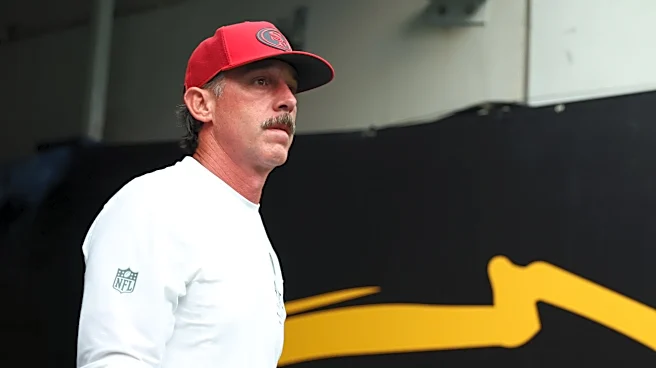
San Francisco 49ers General Manager John Lynch has articulated the team's philosophy regarding midseason trades, stating that such moves must be 'earned' through on-field success. Lynch believes that a team needs to put itself in a strong competitive
position before considering significant additions via trade. He noted that while midseason trades were once rare in the NFL, they have become more prevalent in the last decade, with the 49ers themselves having acquired cornerstone players like Trent Williams and Christian McCaffrey, as well as impactful players such as Emmanuel Sanders and Charles Omenihu. Lynch emphasized that these additions don't always have to be household names but must contribute to the team's success. The general manager's comments suggest a strategic, performance-driven approach to in-season roster enhancements.
Why It's Important?
John Lynch's stance on midseason trades highlights a strategic approach to team building that prioritizes sustained performance and prudent resource management. By emphasizing that trades must be 'earned,' the 49ers aim to avoid impulsive decisions and ensure that any significant roster moves are made to bolster a team already demonstrating its potential. This philosophy can prevent overspending on players for a struggling team and ensures that draft capital and salary cap space are utilized effectively. It also sends a clear message to the players and coaching staff that on-field results are the primary driver for further investment in the roster. This disciplined approach is crucial for long-term competitiveness in the NFL, where resources are finite and every decision carries significant implications.
What's Next?
The San Francisco 49ers will focus on achieving early-season success to put themselves in a position where midseason trades become a viable and strategic option. Should the team perform well and identify a specific need, General Manager John Lynch and his staff will then evaluate potential trade targets that fit their system and financial parameters. This approach means that any trade discussions will likely be contingent on the team's record and overall performance in the first half of the season. Stakeholders, including fans and media, will be closely watching the 49ers' early games to gauge their potential for making significant in-season acquisitions, particularly given past rumors linking them to elite pass rushers.
Beyond the Headlines
John Lynch's philosophy on trades reflects a broader organizational culture within the 49ers that values meritocracy and strategic patience. It suggests that the team is not simply chasing big names but is committed to building a cohesive unit that earns its opportunities. This approach can foster a strong internal competitive environment, as players understand that collective success directly influences the team's ability to acquire additional talent. Furthermore, it underscores the evolving nature of NFL team management, where in-season roster adjustments have become a critical component of championship contention. The 49ers' success with past midseason acquisitions like Trent Williams and Christian McCaffrey demonstrates the potential rewards of this strategy when executed judiciously and from a position of strength.