





What's Happening?
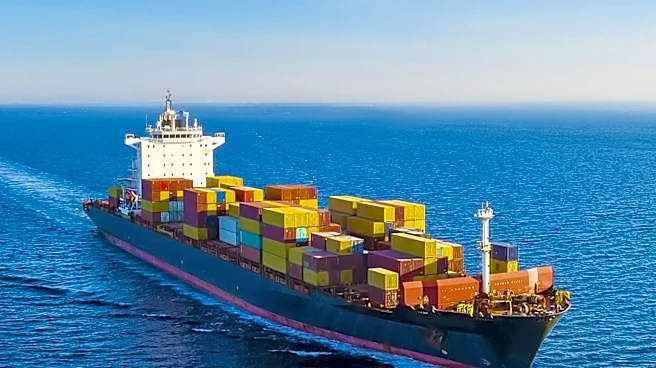
CMA CGM, Ocean Network Express (ONE), and Orient Overseas Container Line (OOCL) have introduced a new generation of containerships that incorporate advanced technologies aimed at enhancing environmental performance and operational efficiency. CMA CGM's
latest vessel, the CMA CGM Notre Dame, was christened in Le Havre, France, and is noted for being the largest LNG-powered containership under the French flag. This vessel is part of a series of ten new ships that will expand CMA CGM's fleet, requiring the hiring of 135 French seafarers over the next two years. Meanwhile, OOCL's new vessel, the OOCL Wisdom, completed its first green methanol bunkering in Qingdao, China, and is the largest methanol dual-fuel container vessel. Ocean Network Express has also launched its S-Series vessels, designed for future fuel conversion and equipped with energy-saving technologies.
Why It's Important?
The introduction of these advanced containerships marks a significant step towards reducing the environmental impact of maritime shipping, a major contributor to global emissions. By adopting LNG and methanol as alternative fuels, these companies are setting a precedent for cleaner shipping practices. The investment in new technologies not only enhances fuel efficiency but also aligns with global efforts to reduce carbon footprints in the shipping industry. This development is crucial for the U.S. and global markets as it may influence regulatory standards and encourage other shipping companies to adopt similar eco-friendly technologies, potentially leading to a more sustainable maritime industry.
What's Next?
As these vessels begin their operations, they are expected to demonstrate the viability and benefits of using alternative fuels and advanced technologies in large-scale shipping. The success of these initiatives could prompt further investments in similar technologies across the industry. Additionally, the increased capacity and efficiency of these ships may lead to more competitive shipping rates and improved supply chain logistics. Stakeholders, including environmental groups and regulatory bodies, will likely monitor the performance of these vessels closely to assess their impact on emissions and operational efficiency.