







What's Happening?
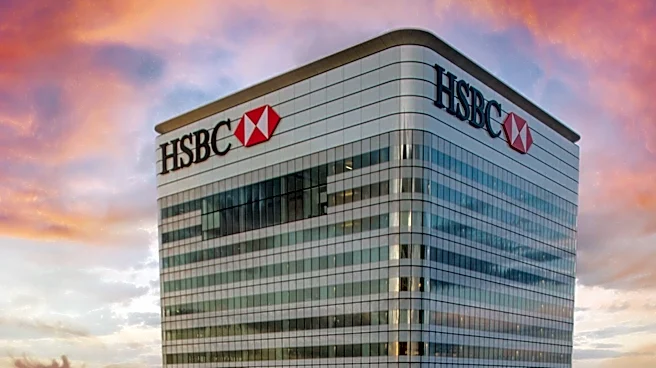
Shares of the customer engagement platform Twilio (NYSE:TWLO) experienced a 7.6% decline in afternoon trading after HSBC downgraded its rating on the stock from 'Hold' to 'Reduce'. This downgrade reflects HSBC's concerns that while Meta Platforms' Muse
AI agent might increase communication volume, it may not significantly enhance Twilio's competitive advantage or revenue capture. The bank also cited intensifying competition within the sector and what it perceives as 'stretched valuation levels' for Twilio's stock. A 'Reduce' rating typically indicates that an analyst expects the stock to underperform and suggests investors consider decreasing their holdings. This move follows recent positive sentiment, as just three days prior, analysts at Rosenblatt and TD Cowen had raised their price targets for Twilio, leading to a 5.8% gain in the stock.
Why It's Important?
This downgrade from a major financial institution like HSBC is significant because it can influence investor sentiment and potentially trigger further stock price volatility for Twilio. The concerns raised about Twilio's competitive moat and valuation levels highlight a critical challenge for technology companies in rapidly evolving markets. As artificial intelligence tools, such as Meta's Muse AI, become more prevalent, the ability of established platforms like Twilio to maintain their market share and pricing power is under scrutiny. If Twilio struggles to differentiate its offerings or capture additional revenue from new AI-driven communication volumes, it could impact its long-term growth prospects and profitability. For investors, a 'Reduce' rating suggests a potential re-evaluation of the stock's future performance, especially given its substantial year-to-date gain of 98.6% and its proximity to its 52-week high.
What's Next?
Following HSBC's downgrade, Twilio's stock performance will likely be closely monitored by investors and analysts. The market's reaction to such news can often be volatile, and while some may see a price drop as a buying opportunity for high-quality stocks, others may heed the warning about stretched valuations and increased competition. Twilio will need to demonstrate how its strategies, particularly in integrating AI and expanding its service offerings, can effectively counter competitive pressures and justify its current valuation. Future earnings reports and management's commentary on market conditions and competitive landscape will be crucial in shaping investor confidence. The company's ability to articulate a clear path to sustainable growth and enhanced profitability in an AI-driven communication environment will be key to addressing the concerns raised by HSBC.
Beyond the Headlines
The HSBC downgrade of Twilio underscores a broader trend in the technology sector where the rapid advancement of AI is reshaping competitive dynamics. Companies that once held strong market positions due to their foundational infrastructure, like Twilio's communication APIs, are now facing new challenges from AI-native solutions and integrated platforms. The concept of a 'competitive moat' is evolving, requiring companies to continuously innovate and adapt to maintain their advantage. This situation highlights the ongoing pressure on tech firms to not only adopt new technologies but also to strategically integrate them in ways that create unique value and protect revenue streams. The market's assessment of Twilio's valuation also reflects a broader investor caution towards growth stocks, especially those facing increased competition and needing to prove the long-term impact of new technological shifts.