




What's Happening?
Etched, a company focused on developing hardware for frontier intelligence, is actively recruiting a Build Engineer in San Jose, California. This role is central to the company's strategy of co-designing chips, racks, software, and manufacturing processes
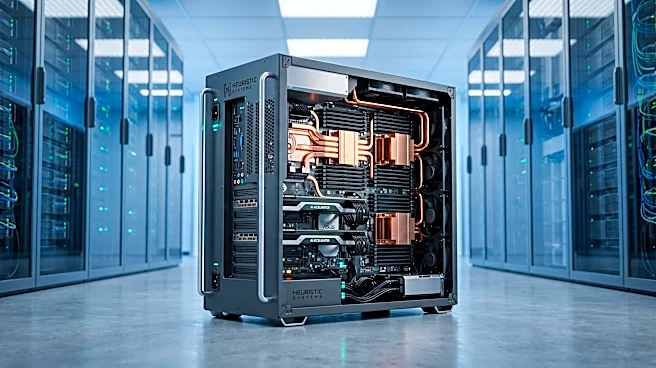
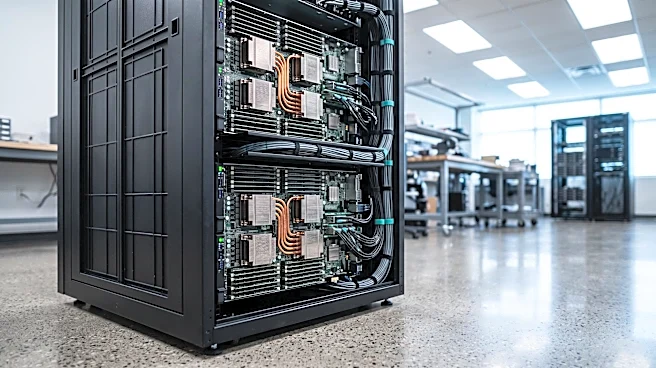
to achieve optimal throughput and latency. The Build Engineer will be responsible for managing internal rack and subassembly builds from initiation to completion, including scheduling, material readiness, staffing, and ensuring on-time delivery. Key responsibilities also involve conducting clear-to-build checks against the Bill of Materials (BOM), collaborating with inventory and supply chain teams to resolve shortages, and creating and maintaining build procedures, work instructions, and travelers. The position requires reviewing CAD models and drawings with design engineers to identify manufacturability and assembly issues early, and designing or specifying necessary fixtures, tooling, and build stations. The Build Engineer will also integrate mechanical, thermal, power, and electrical subsystems into full rack assemblies and develop and execute corresponding test procedures. This role is critical as Etched scales its operations from early builds into New Product Introduction (NPI) and higher-volume production, emphasizing a hands-on approach and leadership of build technicians.
Why It's Important?
This hiring initiative by Etched underscores the escalating demand for specialized hardware in the rapidly expanding field of artificial intelligence, particularly for frontier inference clusters. The company's focus on delivering best-in-class throughput and latency for prefill and decode workloads highlights a critical need within the AI industry for advanced infrastructure capable of handling increasingly complex and large-scale AI models. By integrating its own server racks in-house, Etched aims to maintain control over the entire development and manufacturing process, which is crucial for optimizing performance and accelerating market entry. The role of a Build Engineer is pivotal in this strategy, as it directly impacts the efficiency and quality of hardware production. Success in this area could position Etched as a key player in providing the foundational technology for the next generation of AI applications, influencing the capabilities and accessibility of advanced AI across various sectors. The investment in such specialized roles reflects a broader industry trend towards vertical integration and proprietary hardware development to gain a competitive edge in the AI landscape.
What's Next?
Etched's continued recruitment for specialized roles like the Build Engineer suggests an ongoing expansion of its hardware development and manufacturing capabilities. The company's emphasis on scaling from prototype to volume production indicates a strategic push towards commercialization and broader market penetration for its frontier inference clusters. Future developments will likely involve the successful integration of new hardware designs, optimization of manufacturing processes, and the establishment of robust supply chains to support increased production volumes. The processes and documentation established by the Build Engineer will be crucial for Etched as it transitions into NPI and higher-volume production, setting the foundation for future growth. The company's commitment to an in-person team in San Jose also suggests a focus on fostering close collaboration and rapid iteration in its engineering and research efforts. As Etched progresses, its ability to deliver on its promise of best-in-class throughput and latency will determine its impact on the frontier AI hardware market and its potential to redefine the infrastructure layer for the industry.
Beyond the Headlines
The strategic importance of Etched's approach extends beyond immediate hardware development, touching upon the broader implications of the 'Bitter Lesson' in AI, which posits that general methods that scale with computation tend to be more effective in the long run. By focusing on transformer and transformer-like architectures and anticipating increasing model sizes, Etched is positioning itself at the forefront of a significant paradigm shift in AI. This commitment to building a new category of AI hardware—frontier inference clusters—suggests a long-term vision that could reshape how AI models are deployed and utilized. The company's emphasis on in-house integration and proprietary hardware development also highlights a growing trend among leading AI firms to control the entire technology stack, from silicon to software, to maximize performance and innovation. This vertical integration could lead to more efficient and powerful AI systems, but also raises questions about market concentration and the potential for proprietary ecosystems to dominate the AI landscape. The success of companies like Etched could therefore have profound implications for the future accessibility, cost, and capabilities of advanced artificial intelligence.