




What's Happening?
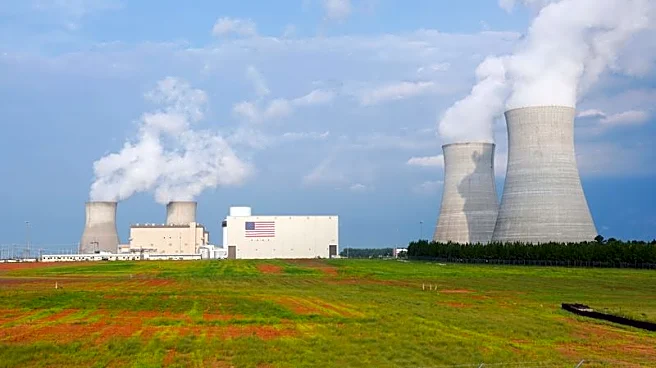
The U.S. Department of Energy (DoE) has approved a conditional loan of up to $17.5 billion to support the supply chain for Westinghouse AP1000 nuclear reactors. This financing aims to address long-standing bottlenecks in the nuclear construction industry
by funding the advance procurement of long-lead time components for up to ten reactors across five sites. The initiative is designed to compress construction timelines by up to three years per project, thereby revitalizing the U.S. nuclear sector. The loan is structured to be repaid through the sale of these components to individual project funding vehicles, ensuring no permanent fiscal commitment from the government.
Why It's Important?
This loan represents a significant step in revitalizing the U.S. nuclear industry, which has faced challenges due to supply chain constraints and lack of investment. By facilitating the advance procurement of critical components, the DoE aims to reduce construction delays and cost overruns, making nuclear energy a more viable option for meeting future energy demands. The initiative also supports the domestic manufacturing sector and could lead to increased demand for uranium, impacting global markets. For Westinghouse, this loan enhances its ability to deploy AP1000 reactors, potentially positioning the company as a leader in the next generation of nuclear energy.
What's Next?
The DoE's loan program will proceed with the establishment of special purpose vehicles to manage the procurement and construction processes. Utility partners will be selected to participate in the projects, with each required to commit significant equity. The first reactors are expected to begin operations around 2035, with the potential for the financing model to be replicated for future projects. This initiative could also stimulate investment in domestic uranium production and enrichment facilities, addressing supply security concerns.