




What's Happening?
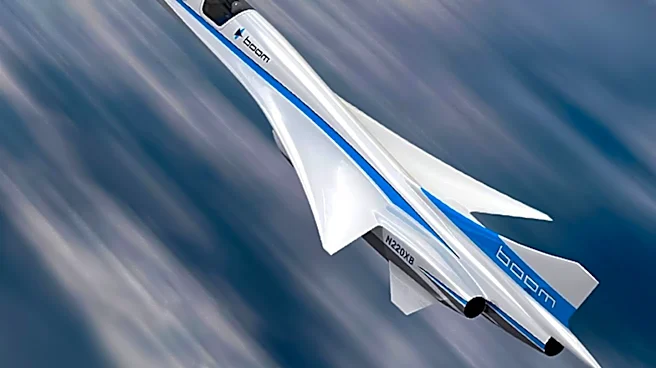
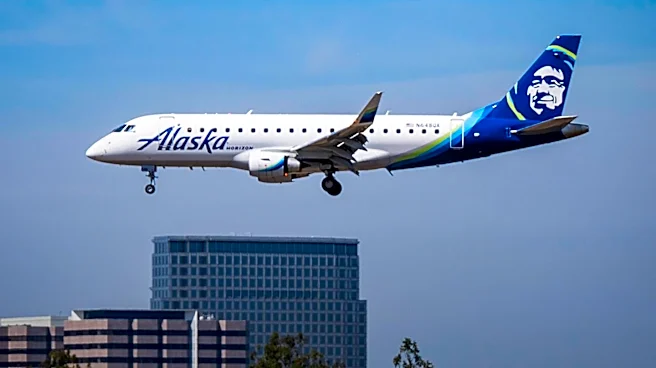
United Airlines CEO Scott Kirby has stated that Boom Supersonic's Overture airliner will not be ready for service before the end of the decade, pushing back previous timelines. United was an early customer for the Overture, committing to 15 aircraft in 2021
with options for 35 more, contingent on safety, operational, and sustainability requirements. Kirby acknowledged the significant development and certification hurdles Boom faces, despite praising the company's adaptability. The original timeline projected Overture's rollout in 2025, first flight in 2026, and passenger service by 2029. However, a major redesign of the aircraft and the decision to develop a new engine, Symphony, have caused delays. Boom's XB-1 demonstrator successfully flew and broke the sound barrier, but it is not a prototype for the larger commercial Overture.
Why It's Important?
This delay has significant implications for the future of supersonic commercial travel and for United Airlines' fleet planning. For the U.S. aviation industry, it underscores the immense technical and regulatory challenges involved in bringing a new supersonic aircraft to market. The extended timeline means that the reintroduction of supersonic passenger flights, once envisioned as a near-term innovation, will take longer to materialize. For United, it means a longer wait for a potentially transformative aircraft that could offer a competitive edge in long-haul travel. The uncertainty surrounding Overture's development could also impact investor confidence in Boom Supersonic and other ventures in advanced aviation. The need to develop and certify both a new aircraft and a new engine simultaneously presents a formidable barrier.
What's Next?
Boom Supersonic is now focusing on developing its Symphony engine and has diversified into producing gas turbines for AI data centers, named Superpower, to help finance Overture's development. The company expects the first Superpower customer deliveries in mid-2027, with plans to scale production. While this new revenue stream could support Overture, it also highlights the financial pressures and technical complexities of the supersonic project. United Airlines will likely continue to monitor Boom's progress, but the revised timeline suggests that the airline will need to adjust its long-term strategic plans regarding supersonic travel. The aviation industry will be watching for further updates on Overture's development and certification, particularly regarding the Symphony engine and the completion of a full-scale prototype.
Beyond the Headlines
The challenges faced by Boom Supersonic reflect the broader difficulties in pioneering new aviation technologies, especially those with high performance and environmental demands. The pivot to gas turbines for data centers illustrates how companies in cutting-edge fields might need to find alternative revenue streams to sustain long-term, capital-intensive projects. This situation also highlights the cautious approach of airlines like United, which, despite initial enthusiasm, remain pragmatic about the feasibility and timelines of revolutionary aircraft. The delay in Overture's entry into service could also influence the regulatory environment for supersonic flight, potentially leading to more stringent requirements as the technology evolves. The story underscores the gap between ambitious technological visions and the practical realities of engineering, certification, and market readiness.