








What's Happening?
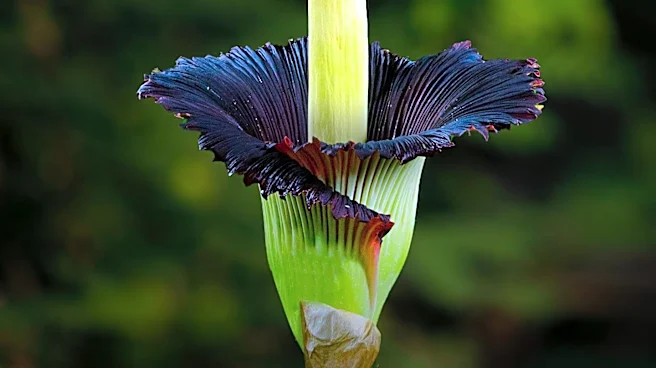
The Huntington Gardens in San Marino, California, recently experienced a rare event with the simultaneous blooming of two corpse flowers, named Odora and Odorysseus. These plants, native to Sumatra, Indonesia, are known for their large size and the strong
odor of rotting flesh they emit when they bloom. The event drew over 5,700 visitors, surpassing last year's attendance. The corpse flowers, which bloom for only 24 to 48 hours every few years, are a significant attraction due to their rarity and the unique experience they offer. The unexpected double bloom was influenced by Southern California's recent high humidity, creating a suitable environment for the plants. Despite a developmental irregularity in Odora's spadix, both plants remain healthy.
Why It's Important?
The blooming of the corpse flowers at the Huntington Gardens highlights the public's growing interest in rare botanical events and the importance of botanical gardens in conservation efforts. These events not only draw large crowds, boosting local tourism and economy, but also raise awareness about endangered plant species. The corpse flower's bloom serves as an educational opportunity, emphasizing the significance of preserving biodiversity and the role of botanical gardens in protecting rare species. The increased attendance also reflects a broader societal trend towards engaging with nature and unique experiences, which can have positive implications for environmental awareness and conservation funding.
What's Next?
Following the successful double bloom, the Huntington Gardens may see increased interest in future botanical events, potentially leading to more educational programs and conservation initiatives. The gardens might also explore ways to accommodate larger crowds, given the high visitor turnout. Additionally, the event could inspire other botanical institutions to promote similar rare plant exhibitions, furthering public engagement with plant conservation. As the corpse flowers are expected to bloom again in three to four years, the Huntington Gardens will likely prepare for another significant visitor influx, using insights gained from this event to enhance visitor experience and educational outreach.