





What's Happening?
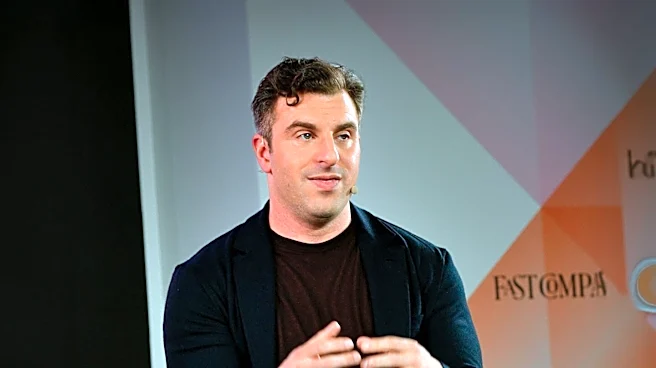
Brian Chesky, CEO and co-founder of Airbnb, has acknowledged that some of his employees might perceive him as a 'control freak.' He attributes his hands-on management style to lessons learned from Apple's late co-founder, Steve Jobs. Chesky explained
that Jobs was known for his extremely high standards, meticulous recruitment process, and deep involvement in product details. Chesky himself dedicates three hours daily to recruitment and expects hiring managers to accept his input. However, he differentiates his approach from micromanagement, defining the latter as explicitly telling employees what to do, which he views as a last resort and an indicator of an employee's potential lack of success. He emphasizes a partnership model, where he asks probing questions and offers suggestions in areas like product, marketing, and operations, rather than dictating tasks. Chesky recounted a conversation with Jony Ive, Apple's former design chief, who worked closely with Jobs for nearly 15 years. Ive reportedly told Chesky that he never felt micromanaged by Jobs, but rather that they were 'constantly partnering' and working together on details.
Why It's Important?
Chesky's explanation of his leadership style offers insight into the operational philosophy of a major U.S. tech company. His comparison to Steve Jobs highlights a common debate in corporate leadership regarding the balance between detailed involvement and employee empowerment. For Airbnb, a company with over 9 million active listings and 8,200 employees globally, the CEO's management approach can significantly influence company culture, innovation, and employee retention. If employees perceive his involvement as supportive and growth-oriented, it could foster a high-performance environment. Conversely, if it's seen as overbearing, it could lead to disengagement or stifled creativity. This discussion is particularly relevant in the tech industry, where rapid innovation often requires both visionary leadership and autonomous teams. Chesky's emphasis on 'partnering' rather than 'telling' suggests an attempt to cultivate a collaborative environment while maintaining high standards, which could impact how Airbnb develops new products and services and navigates its competitive market.
What's Next?
The ongoing discussion about leadership styles within major corporations like Airbnb will likely continue to shape management practices across the U.S. tech sector. Chesky's public articulation of his philosophy may influence how current and prospective employees view working at Airbnb, potentially impacting recruitment and retention efforts. Other tech leaders might draw parallels or contrasts with their own approaches, contributing to broader conversations about effective leadership in fast-paced, innovative industries. Internally, Airbnb's management team may continue to refine how Chesky's detailed involvement is communicated and implemented to ensure it aligns with fostering employee growth and autonomy. The company's ability to maintain its innovative edge while scaling its operations will depend, in part, on how successfully this leadership philosophy translates into daily operations and employee experience.
Beyond the Headlines
This discussion delves into the nuanced aspects of leadership, particularly the fine line between engaged leadership and micromanagement. Chesky's reference to Steve Jobs underscores a prevalent archetype of the visionary, detail-oriented leader in the tech world. The ethical implication lies in how power dynamics are managed within a corporate structure; while a CEO's deep involvement can drive excellence, it also carries the risk of disempowering subordinates if not handled with care. The cultural dimension involves how different generations of employees perceive and respond to such leadership styles. Younger generations, often valuing autonomy and work-life balance, might react differently to intense scrutiny compared to previous generations. Legally, while management style is generally an internal matter, extreme cases of perceived micromanagement could contribute to workplace dissatisfaction, potentially leading to higher turnover or, in rare instances, claims of a hostile work environment. Ultimately, Chesky's approach reflects a broader organizational challenge: how to maintain high standards and drive innovation without stifling individual initiative and creativity.