





What's Happening?
Robin Zeng, founder of Contemporary Amperex Technology Co. Limited (CATL), has transformed the company into the world's largest producer of electric vehicle (EV) batteries, holding over a third of the global market share. Zeng, an engineer with a background
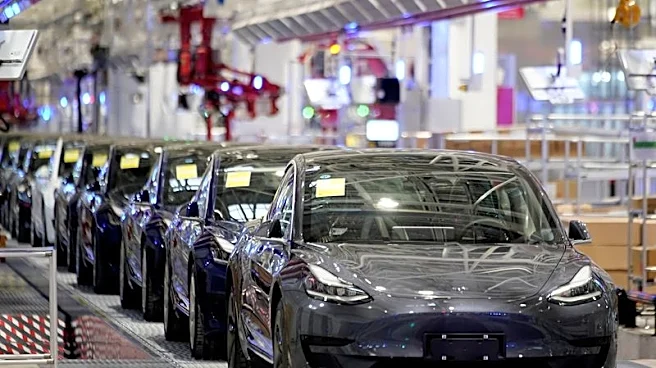
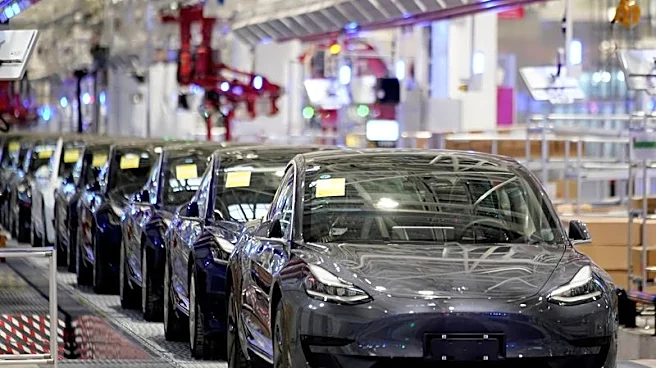
in materials science, founded CATL in 2011, strategically focusing on EV batteries at a time when the Chinese government began prioritizing electric mobility with subsidies and support. CATL's success is attributed to several key decisions: investing heavily in large-scale manufacturing facilities early on, collaborating with major automakers like BMW to meet stringent quality standards, and pursuing vertical integration by investing in lithium mining and battery recycling. A significant breakthrough was CATL's innovation in Lithium Iron Phosphate (LFP) battery technology, particularly with its cell-to-pack (CTP) design, which improved energy density and made LFP batteries a viable, cost-effective, and safer alternative to NMC batteries. This led to a landmark partnership with Tesla, where CATL's LFP batteries are used in standard range Model 3 and Model Y vehicles produced in Shanghai, setting a new industry standard for the mass market.
Why It's Important?
CATL's dominance in the EV battery market, driven by Robin Zeng's vision, is profoundly important for the U.S. automotive industry and its transition to electric vehicles. As U.S. automakers like Ford increasingly partner with CATL for battery supply and technology licensing, it highlights the critical role of foreign suppliers in the domestic EV ecosystem. This reliance on a single, dominant foreign supplier for a core component like EV batteries raises concerns about supply chain security, geopolitical risks, and the competitiveness of U.S. battery manufacturers. While CATL's innovations in LFP technology offer cost-effective and safer battery solutions, accelerating EV adoption, it also underscores the need for the U.S. to bolster its own domestic battery production and research capabilities to reduce dependency and foster economic resilience. The strategic decisions made by CATL directly influence the cost, range, and availability of EVs in the U.S. market, impacting consumers, manufacturers, and national energy policy.
What's Next?
The future of CATL and its impact on the U.S. EV market will be shaped by ongoing geopolitical dynamics and the global race for battery technology leadership. As the U.S. and EU push for localized battery production and stricter component origin requirements, CATL is adapting by building manufacturing facilities outside China, such as in Germany and Hungary, and exploring technology licensing agreements with U.S. companies like Ford. This strategy aims to mitigate geopolitical risks and maintain market access. However, competition from other battery manufacturers, including South Korean and Japanese firms, as well as Chinese rivals like BYD, is intensifying. The development of next-generation battery technologies, such as sodium-ion batteries and solid-state batteries, will also be crucial. CATL's continued investment in R&D, as evidenced by its Qilin and Shenxing batteries, suggests it will remain a formidable player, but the landscape will likely see increased diversification of suppliers and greater emphasis on regional supply chains to enhance resilience and reduce single-point dependencies.
Beyond the Headlines
Robin Zeng's approach to building CATL offers insights into the long-term strategic thinking required in capital-intensive, technologically advanced industries. His background as a materials scientist allowed him to make counter-intuitive bets on technologies like LFP, which ultimately paid off. This highlights the value of deep technical expertise at the helm of a company in a rapidly evolving sector. Furthermore, CATL's strategy of being a neutral supplier to all automakers, rather than developing its own EV brand, has allowed it to become an indispensable partner across the industry. This contrasts with companies like BYD, which produce both batteries and EVs, creating potential conflicts of interest for other automakers. The story of CATL also brings to light the complex interplay between government industrial policy and private enterprise, particularly in China, where state support has been instrumental in fostering national champions in strategic sectors. This model presents both opportunities and challenges for global trade and technological competition, influencing how countries approach critical industries like EV manufacturing.