




What's Happening?
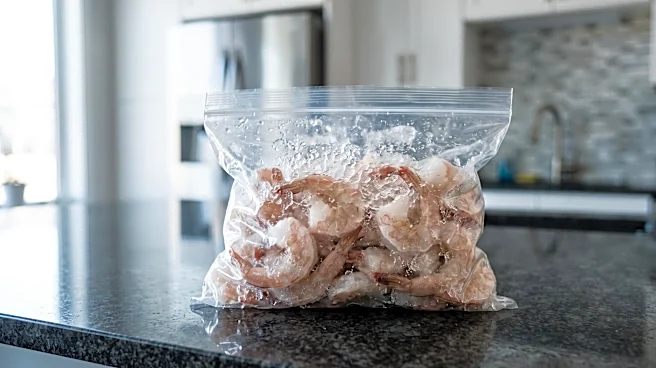
Consumers buying frozen shrimp online frequently encounter issues such as misleading packaging, high 'glaze percentages' (ice coating), and non-standardized size labels, leading to disappointment. Many frozen seafood products are coated with ice, which
can account for up to 30% of the gross weight, meaning consumers pay for frozen water rather than actual shrimp. Terms like 'Jumbo' or 'Giant' for shrimp size are not standardized, making it difficult for buyers to accurately gauge the product's true size. Additionally, some shrimp require unexpected preparation work like peeling and deveining, which can be inconvenient for those seeking quick meal solutions. To mitigate these issues, consumers are advised to look for net drained weight, understand size grading based on count per pound (e.g., '16/20' means 16 to 20 shrimp per pound), and consider the processing state (e.g., 'P&D' for peeled and deveined, or 'Easy Peel' for convenience).
Why It's Important?
The prevalence of these issues in the online frozen shrimp market impacts consumer trust and satisfaction, potentially leading to financial losses for buyers who receive less product or lower quality than expected. For U.S. consumers, this means a need for greater vigilance and education when purchasing seafood online, as misleading practices can affect household budgets and meal planning. The lack of standardized labeling for size and the 'water trap' issue highlight a gap in consumer protection within the online food retail sector. This situation could prompt calls for clearer labeling regulations or industry standards to ensure transparency and fair value for consumers. Businesses that prioritize clear labeling and accurate product descriptions stand to gain consumer loyalty, while those that engage in ambiguous practices risk reputational damage and potential regulatory scrutiny.
What's Next?
To ensure quality, shrimp should be thawed slowly in the refrigerator or under cold, running water; thawing in a microwave or at room temperature is discouraged due to potential texture impairment and bacterial growth. 'Easy Peel' shrimp, with a cut shell along the back, simplify vein removal and peeling after cooking, offering a balance between flavor and convenience. Smaller, peeled shrimp can often be cooked directly from frozen, requiring a slightly longer cooking time. However, for larger shrimp or methods like pan-searing or grilling, thawing beforehand is recommended to ensure even cooking and prevent a watery texture. Consumers will likely continue to seek out products with clear net weight declarations and standardized size indicators to avoid common pitfalls.
Beyond the Headlines
The challenges in purchasing frozen shrimp online reflect broader issues within the e-commerce food industry regarding product transparency and consumer information. This situation underscores the importance of detailed product descriptions and standardized metrics to empower consumers to make informed decisions. The 'water trap' issue, where ice glaze contributes significantly to product weight, raises ethical questions about fair pricing and honest representation of goods. This could lead to increased consumer demand for clearer labeling on all frozen food products, potentially influencing industry practices and regulatory frameworks to ensure that what consumers see online accurately reflects what they receive. The shift towards online grocery shopping further amplifies the need for robust standards to protect consumers from deceptive practices.