








What's Happening?
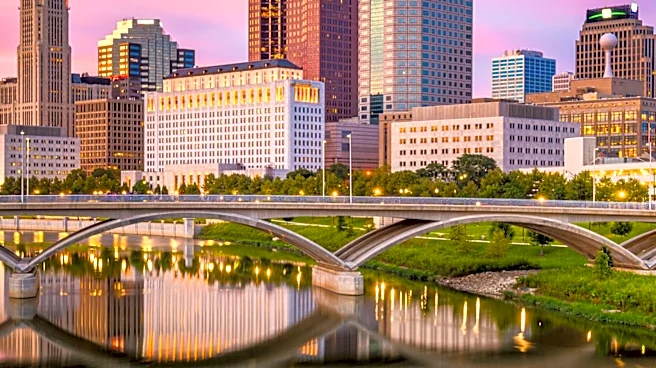
Huntington Bank, headquartered in Columbus, Ohio, announced plans to relocate its historic downtown Columbus branch to a new street-level storefront within the same building at 17 S. High St. This move is intended to maintain the bank’s 160-year presence
at the intersection of Broad and High. The relocation is projected to be completed by summer 2027. Until the new space is ready, Huntington will continue operations at its current historic branch, ensuring uninterrupted banking services for downtown customers. The new branch will offer the same personal and business banking services, along with access to Huntington’s digital banking capabilities. This strategic move is part of a larger redevelopment at 17 S. High St., where The Ohio State University Moritz College of Law will occupy the former branch space. Huntington previously sold the building to Downtown Columbus, Inc. The bank's connection to this intersection dates back to 1866 when P.W. Huntington founded the bank there.
Why It's Important?
This relocation is significant for several reasons, impacting both Huntington Bank and the downtown Columbus area. For Huntington, it represents a modernization effort that balances historical preservation with contemporary banking needs, providing a more accessible and modern environment for customers and employees. By remaining at Broad and High, the bank reinforces its long-standing commitment to the downtown core, which is undergoing various redevelopment initiatives. For The Ohio State University Moritz College of Law, occupying the historic branch space will place the law school within close proximity to a significant percentage of the flagship law firms that recruit its students. This physical proximity is expected to foster stronger ties between the college and Columbus’ legal and civic communities, offering students enhanced opportunities for education and career development. The project also ensures that a historically significant building gains a new institutional use while preserving elements of its banking heritage through planned displays.
What's Next?
The relocation of Huntington Bank's downtown Columbus branch is scheduled for completion in summer 2027. Until then, the existing historic branch will remain fully operational, ensuring no disruption to customer services. As the completion date approaches, Huntington plans to release additional details regarding the new branch's opening date, operating hours, and the transition process for customers. Concurrently, The Ohio State University Moritz College of Law will proceed with its plans to occupy the historic branch space, developing it into part of its downtown campus. This will include the construction of a permanent display within the former banking space, highlighting the building's historical significance, including P.W. Huntington’s original office and other architectural details. The broader redevelopment of the 17 S. High St. property will continue, contributing to the ongoing revitalization efforts in downtown Columbus.
Beyond the Headlines
The relocation of Huntington Bank's branch signifies more than just a physical move; it reflects a broader trend in urban development where historic buildings are repurposed to meet modern needs while preserving their heritage. This project exemplifies how institutions can adapt to changing urban landscapes, balancing commercial interests with educational and community development goals. The collaboration between Huntington Bank, Downtown Columbus, Inc., and The Ohio State University Moritz College of Law showcases a model for urban revitalization that integrates corporate presence, academic expansion, and historical preservation. The decision to maintain a presence at the historic intersection underscores the value placed on continuity and legacy in corporate branding, even as physical spaces evolve. This move could also set a precedent for how other cities approach the redevelopment of their historic downtown areas, encouraging creative solutions that benefit multiple stakeholders and contribute to the cultural and economic vibrancy of the urban core.