

What's Happening?
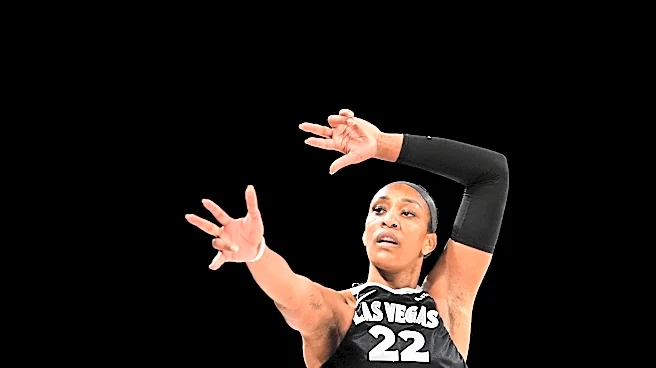
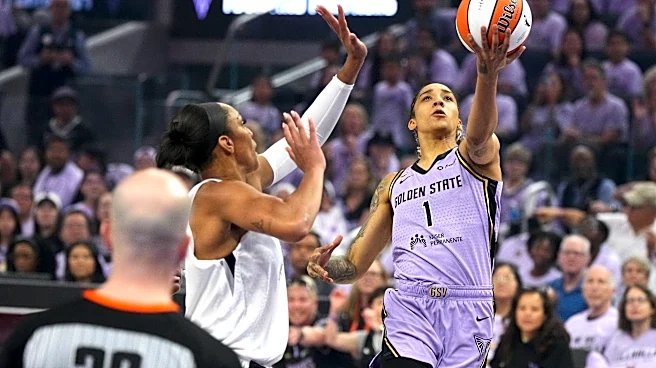
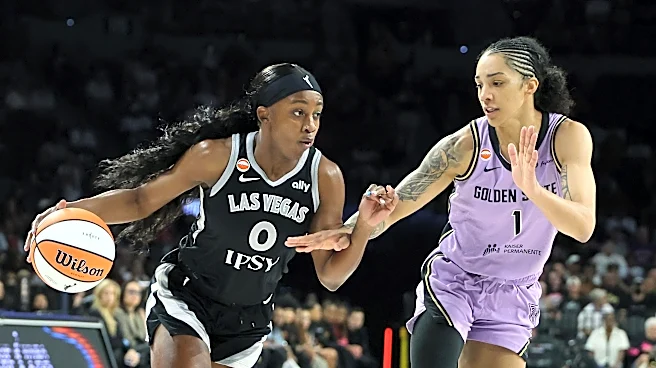
Sophie Cunningham, a player for the Indiana Fever, has publicly addressed the ongoing debate surrounding fan interactions and player conduct in the WNBA. Her comments come after an incident where Las Vegas Aces forward A'ja Wilson confronted a fan during
a playoff game. Cunningham, speaking on her podcast, asserted that WNBA players should develop 'thicker skin' and accept the scrutiny that comes with being a professional athlete, drawing parallels to the experiences of male counterparts. She highlighted her own history of facing significant online harassment and criticism, stating it is an inherent part of being in the spotlight. This stance has positioned Cunningham as a figure who challenges prevailing narratives within certain media circles regarding player-fan dynamics and the broader culture of the league. The Athletic columnist Candace Buckner criticized Cunningham, suggesting her outspokenness has become a distraction for the Fever.
Why It's Important?
Cunningham's remarks are significant as they introduce a contrasting perspective into the discussion about player-fan boundaries and the expectations placed on professional athletes in the WNBA. Her call for players to 'grow up' and accept criticism, even harsh feedback, directly challenges the narrative that players are overly sensitive to fan interactions. This viewpoint could resonate with a segment of the sports audience that believes athletes should be more resilient to public scrutiny. Conversely, it may draw criticism from those who advocate for stricter protections for players against harassment. The debate highlights a cultural divide within the league and its fanbase regarding how players should navigate their public personas and respond to the pressures of professional sports. The differing opinions also underscore the evolving landscape of athlete-fan engagement in the digital age.
What's Next?
The ongoing discussion initiated by Cunningham's comments is likely to continue influencing conversations within the WNBA community, including players, media, and fans. As a soon-to-be WNBA free agent, Cunningham's outspoken nature could impact her future team affiliations, with some organizations potentially valuing her candidness while others might view it as a potential distraction. The league itself may face pressure to clarify or reinforce its policies regarding fan conduct and player interactions, especially as the WNBA continues to grow in popularity and media attention. Other players may also be prompted to share their perspectives, potentially leading to a broader dialogue about the responsibilities of athletes and the role of fans in professional sports. The incident involving A'ja Wilson and Cunningham's subsequent comments could serve as a catalyst for further discussions on sportsmanship and fan engagement.
Beyond the Headlines
Beyond the immediate controversy, Cunningham's stance touches upon deeper themes of authenticity, resilience, and the commercialization of athlete personas. Her willingness to express views that diverge from some mainstream media narratives suggests a broader cultural shift where athletes are increasingly using their platforms to voice independent opinions, even if those opinions are unpopular in certain circles. This also raises questions about the role of media in shaping public perception of athletes and the potential for media narratives to create or exacerbate divisions. The debate also implicitly touches on gender dynamics in sports, as Cunningham's comparison to male athletes suggests a desire for equal expectations regarding resilience and handling public pressure. Her popularity, despite or perhaps because of her controversial opinions, indicates a segment of the audience values outspokenness and a departure from perceived political homogeneity in sports.