



What's Happening?
Double Olympic champion Jakob Ingebrigtsen has issued a partial apology for calling his rivals 'losers' and 'a bunch of cowards' following a contentious men's 1500m Diamond League final. Ingebrigtsen, who finished fourth in the race with a time of 3min
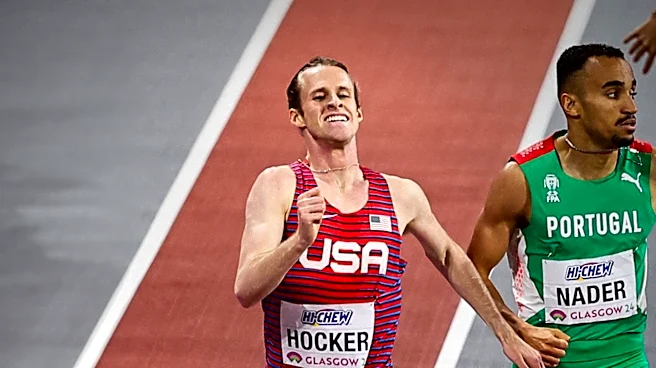
30.52sec, stated, 'I shouldn’t have called anyone losers. I apologise for that. It was beneath me, regardless of the adrenaline and emotions.' However, he maintained his accusation that Olympic 1500m champion Cole Hocker acted cowardly. Ingebrigtsen claims Hocker's team promised a fast pace and brought their own pacemaker, only for Hocker to then 'hide behind others in the race.' He emphasized that this was not about his loss but about taking responsibility for commitments made to organizers, the crowd, and competitors. The controversy escalated when Hocker's agent, Ray Flynn, criticized Ingebrigtsen, calling him a 'whiny runner who blames others,' which Ingebrigtsen dismissed, stating he and Hocker had settled the matter privately.
Why It's Important?
This incident highlights the intense competitive spirit and the high stakes involved in elite athletics, particularly in events like the 1500m where strategic racing is paramount. Ingebrigtsen's comments and subsequent partial apology, while directed at his competitors, also reflect broader discussions within sports about sportsmanship, competitive tactics, and the responsibility athletes have to their audience. The public exchange between Ingebrigtsen and Hocker's agent underscores the role of athlete representation in managing public perception and defending their clients. For U.S. athletics, Cole Hocker is a significant figure, and any controversy involving him draws attention to American middle-distance running. The debate over race strategy—whether athletes are obligated to maintain a promised pace—could influence future race dynamics and how athletes approach pre-race declarations, potentially impacting the entertainment value and competitive integrity of future events.
What's Next?
The immediate next step for both Jakob Ingebrigtsen and Cole Hocker could be a potential rematch at the Ultimate Championships in Budapest. Ingebrigtsen was initially slated to compete in both the 1500m and 5,000m events there, though reports suggest he might now focus solely on the 5,000m. If Hocker also participates in the 1500m, their next encounter will be highly anticipated, with increased scrutiny on their respective race strategies and interactions. The public and media will likely watch closely to see if the tension from the Diamond League final carries over. Beyond immediate competitions, this incident may prompt discussions among race organizers and athletic federations regarding athlete conduct, pre-race declarations, and the expectations placed on competitors to deliver on promised race dynamics, potentially leading to clearer guidelines or codes of conduct for athletes.
Beyond the Headlines
This dispute delves into the unwritten rules and ethical considerations within competitive sports. Ingebrigtsen's argument about responsibility to the crowd and organizers touches on the entertainment aspect of athletics, suggesting that athletes have a duty to deliver exciting races, especially when specific paces are announced. This raises questions about the balance between strategic racing—where conserving energy and tactical positioning are key—and providing a spectacle for fans. The incident also highlights the psychological warfare that can occur between elite athletes, where verbal jabs and accusations can be part of the competitive landscape, aiming to gain a mental edge. Furthermore, the involvement of an agent in the public spat underscores the commercialization of sports and how athlete brands are managed, even in the face of controversy. This event could contribute to a broader conversation about authenticity versus performance in professional sports.