









What's Happening?
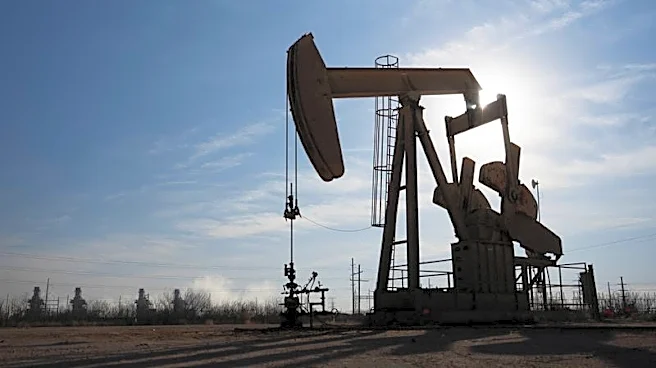
Oil prices have decreased to below $80 per barrel, a level not seen since March. This decline in oil prices is significant as it marks a shift in the market dynamics that have been influenced by various global factors. The drop in prices could be attributed
to changes in supply and demand, geopolitical tensions, or economic forecasts that impact the oil market. The price of oil is a critical economic indicator, affecting everything from transportation costs to the price of goods and services.
Why It's Important?
The reduction in oil prices can have widespread implications for the U.S. economy. Lower oil prices generally lead to reduced costs for transportation and manufacturing, potentially lowering the cost of goods and services for consumers. This can increase disposable income and stimulate economic activity. However, it can also impact domestic oil producers, who may face reduced revenues and profitability. The energy sector is a significant component of the U.S. economy, and fluctuations in oil prices can influence investment decisions, employment, and regional economic health, particularly in oil-producing states.
What's Next?
If the trend of declining oil prices continues, it could lead to adjustments in production levels by major oil-producing countries to stabilize prices. The U.S. government and energy companies may need to reassess their strategies in response to these market changes. Additionally, consumers and businesses might experience shifts in energy costs, influencing spending and investment patterns. Monitoring the global economic indicators and geopolitical developments will be crucial in predicting future movements in oil prices.