








What's Happening?
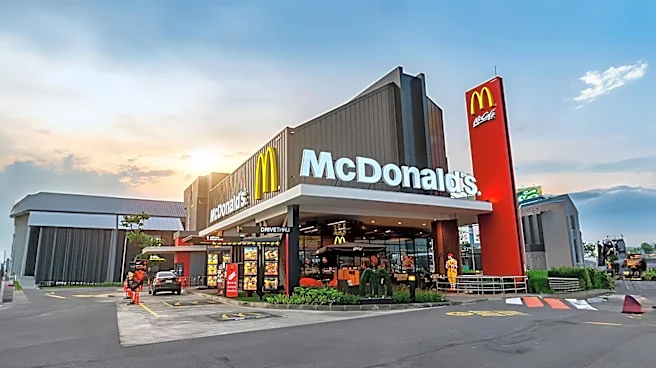
McDonald's has successfully met its commitment to source 100% cage-free eggs for its U.S. operations in 2024, ahead of its initial 2025 target. This achievement follows an announcement made in 2015 to transition to cage-free eggs. The company stated in a 2024 announcement that
cage-free farms house hens in open environments, allowing for natural behaviors and providing enrichments like perches, scratch areas, and nests. Veterinarians are also available to offer guidance to staff on these farms. The transition involved significant collaboration with food corporation Cargill, which adjusted its downstream egg producers' operations to meet McDonald's new standards. This included Cargill and its suppliers visiting Europe to study cage-free poultry practices and investing in new equipment and infrastructure to facilitate the change.
Why It's Important?
McDonald's transition to 100% cage-free eggs is a significant development for the U.S. food industry and animal welfare standards. As one of the largest fast-food chains globally, McDonald's purchasing decisions have a substantial ripple effect throughout the agricultural supply chain. This move encourages other food companies to adopt similar practices, potentially leading to a broader shift towards more humane treatment of laying hens. The collaboration with Cargill highlights the complex logistical and financial investments required for such a large-scale change, demonstrating how major corporations can influence their suppliers to meet new ethical and sustainability goals. This initiative also responds to growing consumer demand for ethically sourced products, enhancing McDonald's brand image and potentially attracting a wider customer base concerned with animal welfare.
What's Next?
The successful implementation of McDonald's cage-free egg policy will likely lead to continued scrutiny and potential expansion of similar animal welfare initiatives within the fast-food industry. Other major food companies may face increased pressure from consumers and advocacy groups to follow suit, accelerating the industry-wide shift towards cage-free egg production. Cargill and its network of egg producers will continue to operate under the new cage-free standards, potentially refining their practices and sharing their expertise with other clients. The definition and enforcement of 'cage-free' standards may also evolve, with ongoing discussions about the specifics of hen living conditions, such as space per bird and access to outdoor areas. This development could also spur further innovation in sustainable and ethical food production methods across the agricultural sector.
Beyond the Headlines
While the move to cage-free eggs is a step towards improved animal welfare, the term 'cage-free' itself can be subject to varying interpretations. As the source notes, while hens are not in restrictive cages, their living conditions can still be crowded, often in windowless enclosures. This raises deeper questions about the true extent of animal welfare improvements and the need for more comprehensive standards that address factors beyond just cages, such as outdoor access and overall environmental quality. The significant investment by Cargill and its suppliers underscores the economic implications of such transitions, including potential impacts on egg prices and the viability of smaller farms. This also highlights the power of large corporate buyers like McDonald's to drive change in agricultural practices, demonstrating how consumer preferences, channeled through major brands, can reshape entire industries and spark ongoing debates about ethical food production.