


What's Happening?
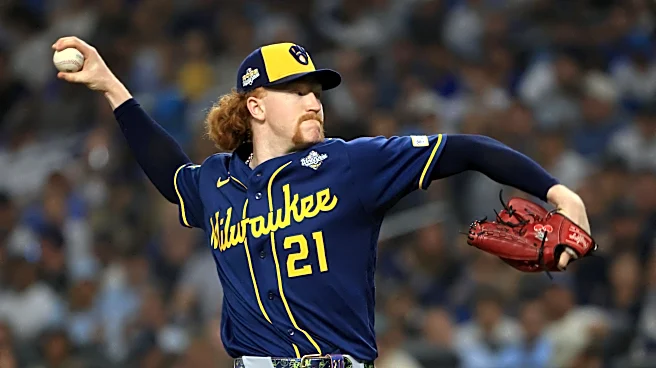
The Milwaukee Brewers are confronting significant decisions regarding their pitching rotation for the 2027 season after right-handed starter Dustin May signed a three-year, $52.5 million contract with the Chicago White Sox. May's departure, following
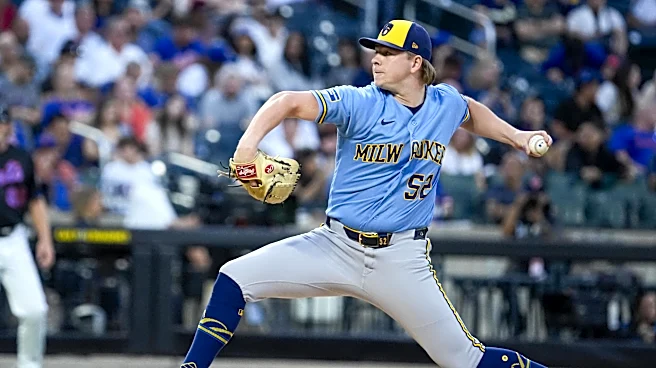
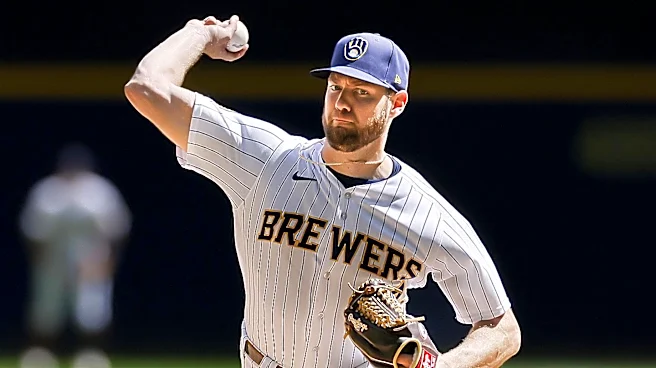
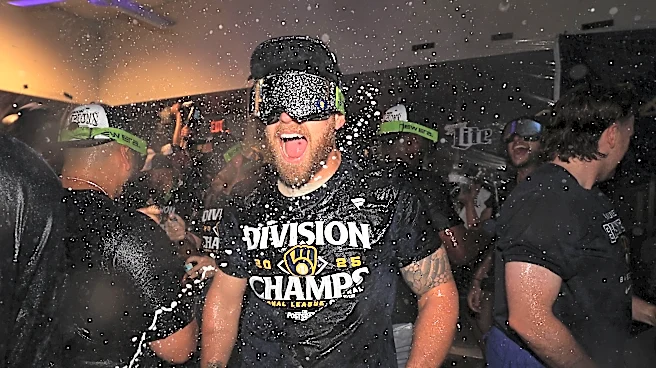
a 2026 season where he was an inconsistent yet intriguing option, leaves a void that the Brewers must address. The team is also awaiting the decision of Brandon Woodruff, another key veteran pitcher from their 2026 World Series-winning roster, who has entered free agency. While Jake Bauers' denial of a qualifying offer and subsequent signing with the Boston Red Sox has freed up financial resources, the Brewers' strategy for utilizing these funds remains unclear. The organization possesses several young arms, including Jacob Misiorowski, Logan Henderson, Robert Gasser, and Kyle Harrison, who are considered internal options to step into larger roles. Additionally, players like Quinn Priester, Shane Drohan, Coleman Crow, and Brandon Sproat are noted for their intriguing upside, suggesting a reliance on developing talent to fill the gaps.
Why It's Important?
This situation is important for the Milwaukee Brewers as it directly impacts their competitive outlook for the upcoming season, particularly after their 2026 World Series victory. The loss of an experienced arm like Dustin May, coupled with the uncertainty surrounding Brandon Woodruff, places pressure on the team's ability to maintain a strong pitching staff. While the Brewers have a history of developing young talent, relying heavily on inexperienced pitchers carries inherent risks, as demonstrated by their 2026 season where they succeeded despite an unseasoned rotation. The decision on how to allocate freed-up funds, whether to invest in another experienced free-agent starter or to fully commit to their youth movement, will shape the team's strategy. This scenario highlights the ongoing challenge for successful teams to balance veteran presence with the development of promising prospects, especially in the high-stakes environment of professional baseball. The outcome will influence the team's performance and potentially set a precedent for how they manage their roster in future seasons.
What's Next?
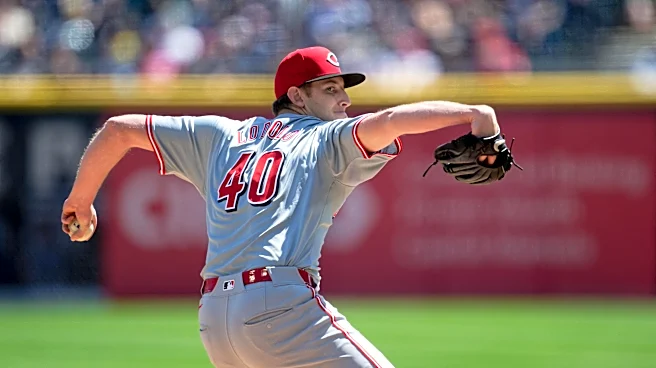
The Milwaukee Brewers will continue to evaluate their options for the 2027 pitching rotation. This includes monitoring Brandon Woodruff's free agency decision, as a reunion, potentially in a modified relief role, could provide a veteran presence. The team will also assess the readiness of their young pitchers, such as Jacob Misiorowski, Logan Henderson, Robert Gasser, Kyle Harrison, Quinn Priester, Shane Drohan, Coleman Crow, and Brandon Sproat, to take on increased responsibilities. The Brewers' front office will explore the free-agent market for experienced starters, with names like Nick Martinez, Michael Lorenzen, Cal Quantrill, and former Brewer Colin Rea being considered. However, a major investment in a free agent is deemed unlikely, suggesting the team may lean towards its historical approach of finding value without making significant splashes. The coming weeks and months will reveal whether the Brewers prioritize leaning into their youth or seek to add veteran stopgaps to provide stability to their rotation.
Beyond the Headlines
The Brewers' current predicament extends beyond immediate roster decisions, touching upon the broader philosophy of team building in professional sports. Their success in 2026 with an inexperienced rotation, while commendable, underscores the inherent volatility of relying on young talent. The challenge now is to replicate that success without the benefit of a surprise factor. This situation could influence future team-building strategies across the league, particularly for franchises that prioritize player development over high-cost free-agent acquisitions. The ethical dimension involves balancing the development of young players with the competitive demands of a championship-contending team. The long-term shift could see a greater emphasis on internal talent pipelines and strategic, cost-effective veteran additions, rather than large-scale free-agent spending, especially for teams with a proven track record of developing prospects. This approach, if successful, could redefine how teams manage their payroll and roster construction in a competitive league.