



What's Happening?
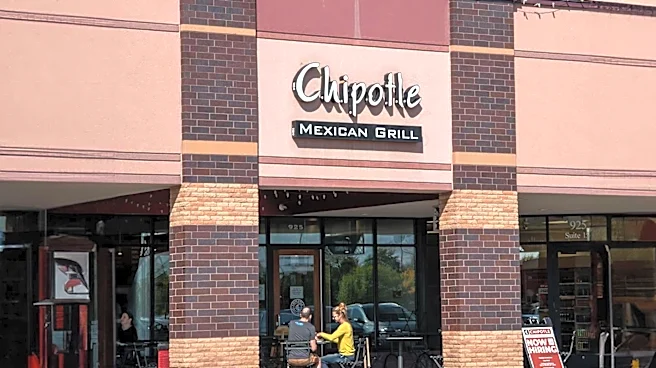
Chipotle Mexican Grill is actively promoting a shift in the future of farming and food, emphasizing its commitment to responsible sourcing and sustainable practices. The company aims to redefine the fast-food experience by engaging in conversations and directly
supporting initiatives that benefit the agricultural sector. This commitment is part of Chipotle's broader mission to make better food accessible to everyone, focusing on responsibly sourced, classically cooked, real food made with wholesome ingredients, free from artificial colors, flavors, or preservatives. Chipotle operates restaurants across the United States, Canada, the United Kingdom, France, and Germany, uniquely owning and operating all its North American and European locations. The company is also expanding rapidly, opening new restaurants frequently, and is dedicated to fostering a workplace that values its employees and promotes growth.
Why It's Important?
Chipotle's focus on sustainable farming and food systems holds significant importance for the U.S. food industry and consumers. By championing responsibly sourced ingredients, Chipotle influences supply chains and encourages other large food corporations to adopt similar practices. This commitment can lead to increased demand for products from small and local farmers, potentially boosting their economic viability and promoting more environmentally friendly agricultural methods. For consumers, it means greater access to food that is perceived as healthier and more ethically produced. This initiative also contributes to broader discussions about food security, environmental impact, and the role of corporations in driving positive change within the food sector, potentially setting new industry standards for transparency and sustainability.
What's Next?
Chipotle is expected to continue its expansion, opening new restaurants and further integrating its sustainable sourcing practices into its growing operations. The company's ongoing efforts to support farming and food initiatives suggest a continued focus on partnerships with suppliers who align with their values. This could involve further investment in agricultural technologies, farmer training programs, or direct purchasing agreements that benefit small and local producers. As Chipotle grows, its influence on consumer preferences for responsibly sourced food is likely to increase, potentially leading to more widespread adoption of sustainable practices across the fast-food and restaurant industries. The company's commitment to employee development also indicates a continued focus on internal growth and talent retention.
Beyond the Headlines
Chipotle's advocacy for sustainable farming extends beyond mere business practices; it touches upon critical ethical and cultural dimensions of food production and consumption. By highlighting the importance of 'real food' and responsible sourcing, Chipotle challenges conventional fast-food models and encourages a deeper societal appreciation for the origins of our food. This approach can foster a more conscious consumer base that demands transparency and ethical practices from food providers. Furthermore, the emphasis on supporting farmers can help preserve traditional farming knowledge and promote biodiversity, counteracting the industrialization of agriculture. This movement could lead to a long-term shift in how food is valued, moving towards a system that prioritizes ecological health, social equity, and nutritional quality.