



What's Happening?
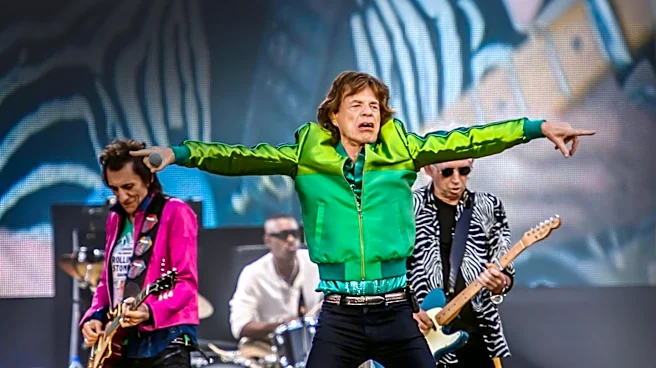
The Museo Nazionale del Cinema has acquired the original 113-page screenplay for Werner Herzog’s film 'Fitzcarraldo.' This document provides insight into the film's initial version, which featured Mick Jagger in a significant role that was ultimately
cut. The screenplay reveals that the protagonist, Brian Sweeney Fitzgerald (Fitzcarraldo), was originally split into two characters, with actor Jason Robards and singer Mick Jagger cast in these parts. Filming began in 1979 with Robards and Jagger in the Amazon. However, due to extensive production delays, including accidents, tensions, and Robards' serious illness, Jagger was forced to leave the production to fulfill commitments with the Rolling Stones. Consequently, his character was entirely removed from the film, and the scenes were reshot with Klaus Kinski taking over the lead role from Robards. The final version of the film, which earned Herzog the Best Director award at the 1982 Cannes Film Festival, does not include Jagger.
Why It's Important?
This discovery is significant for film historians and enthusiasts, offering a rare glimpse into the tumultuous and complex production of 'Fitzcarraldo,' a film renowned for its challenging creation process. The revelation of Mick Jagger's initial involvement highlights the fluid nature of film production, where creative and logistical hurdles can drastically alter a project's trajectory. For the entertainment industry, it underscores the often-unseen efforts and changes that occur behind the scenes of major cinematic works. The screenplay's acquisition by the Museo Nazionale del Cinema ensures the preservation of a crucial historical document, allowing future generations to study the evolution of Herzog's vision and the impact of external factors on artistic endeavors. It also provides a unique case study of how a film's narrative and casting can undergo radical transformations from conception to final cut, influencing its eventual critical and commercial reception.
What's Next?
The acquired screenplay will be preserved at the Historical Archive of the Museo Nazionale del Cinema, making it available for research and study. This document is expected to attract significant interest from film scholars, Herzog enthusiasts, and fans of Mick Jagger, potentially leading to new analyses and interpretations of 'Fitzcarraldo' and Herzog's filmmaking process. Exhibitions or academic discussions centered around this screenplay could emerge, further illuminating the film's production history. The museum's acquisition also sets a precedent for the importance of preserving early drafts and production documents, encouraging other institutions to safeguard similar materials that offer invaluable insights into the creative and logistical challenges of filmmaking. This could lead to a broader appreciation for the archival value of screenplays and production notes in understanding cinematic history.
Beyond the Headlines
The 'Fitzcarraldo' screenplay's journey, from a working document to a preserved artifact, reflects broader themes within the arts: the tension between artistic vision and practical constraints, and the often-unseen labor involved in creative projects. The story of Mick Jagger's departure due to touring commitments also highlights the intersection of different entertainment industries—music and film—and how their schedules and demands can conflict. Ethically, it raises questions about the ownership and preservation of creative works, especially those that undergo significant changes. The document serves as a tangible reminder that even acclaimed masterpieces often have alternative histories and unrealized versions, challenging the perception of a singular, definitive artistic creation. It underscores the idea that a film is not just its final cut but also the sum of its discarded ideas and the challenges overcome during its making.