




What's Happening?
Panduit, a company specializing in data center infrastructure, is responding to significant shifts in the market, particularly the escalating power demands driven by Artificial Intelligence (AI). According to Hans Obermillacher, Business Development Manager
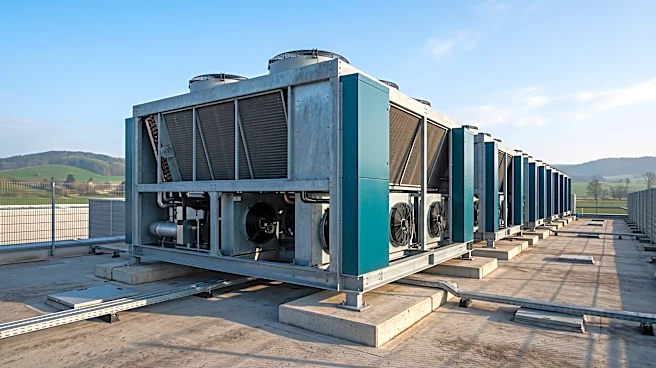
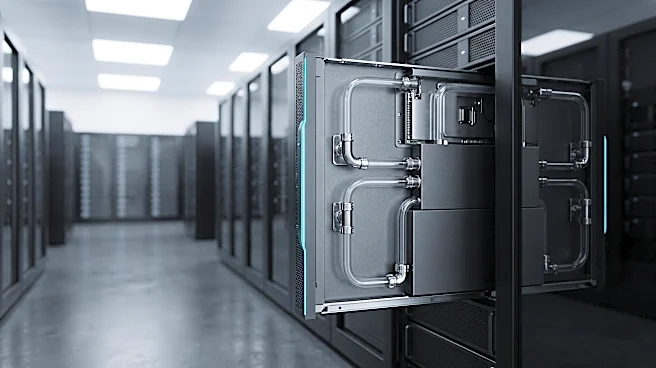
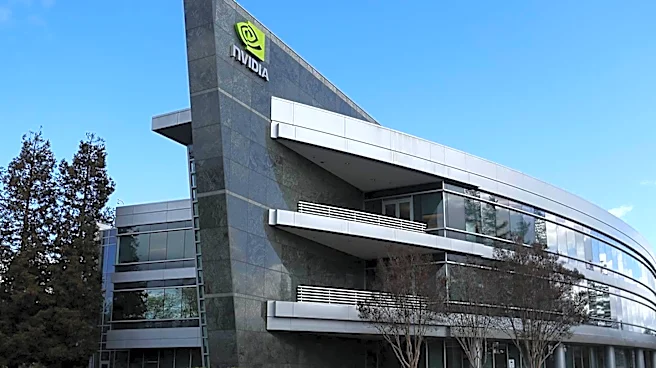
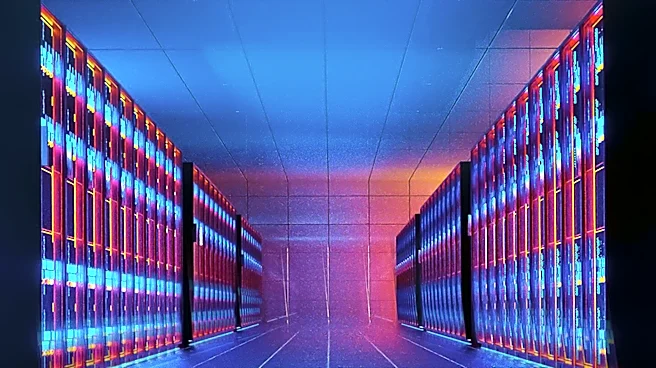
for Data Centre Infrastructure at Panduit, power consumption per cabinet has surged from 1kW 20 years ago to 40-50 kW today, with projections reaching 500 kW+ in the future. This necessitates a complete overhaul in cooling approaches, moving from traditional room cooling to on-chip and liquid-based rear door heat exchanger cooling. Another major shift is the rise of Multi-Tenant Data Centers (MTDCs) where service providers own the compute infrastructure, and clients only own the data. Additionally, Edge Computing is gaining prominence, bringing computing capacity closer to the point of activity for applications like autonomous driving, which require low latency and sufficient bandwidth. Panduit has collaborated with NVIDIA to publish a structured cabling guide to support the massive data requirements of NVIDIA DGX SuperPOD systems.
Why It's Important?
The transformation in data center infrastructure is critical for the continued advancement and deployment of AI technologies across various U.S. industries. The dramatic increase in power consumption and the need for advanced cooling solutions directly impact operational costs and energy efficiency for businesses relying on data centers. The shift towards MTDCs and Edge Computing signifies a fundamental change in how companies access and manage their computational resources, potentially leading to more distributed and specialized data processing. This evolution affects technology companies, cloud service providers, and any industry leveraging AI, from finance to healthcare. Companies like Panduit, by investing in R&D and developing solutions for these challenges, play a crucial role in enabling the next generation of digital infrastructure, ensuring that the U.S. remains competitive in technological innovation.
What's Next?
Looking ahead, Panduit anticipates further changes in power distribution within data centers, with a move towards 800-volt systems and power bars at the back of cabinets to handle the immense power requirements of generative AI. Panduit's R&D department, with nearly 300 engineers, is actively exploring future infrastructure designs and requirements, investing 4-5% of its revenue in R&D. The company plans to introduce new products, such as the EL2P Series PDU, which offers intelligent monitoring, management, and combo-outlets for high-density racks, along with robust cybersecurity and integration capabilities. These developments indicate a continuous effort to adapt and innovate in response to the evolving demands of AI and data center technology, ensuring that infrastructure can keep pace with rapid technological advancements.
Beyond the Headlines
The underlying implications of these shifts extend beyond mere technological upgrades. The escalating energy demands of AI raise significant environmental concerns, pushing for more energy-efficient cooling and power distribution methods. The move towards MTDCs and Edge Computing also has implications for data security and privacy, as data ownership and physical location become more complex. Furthermore, the specialized infrastructure required for AI could lead to a greater concentration of computing power in the hands of a few large service providers, potentially impacting market competition and innovation. The need for robust and adaptable infrastructure highlights the critical role of companies like Panduit in shaping the future digital landscape and addressing the complex interplay between technology, energy, and economic development.