





What's Happening?
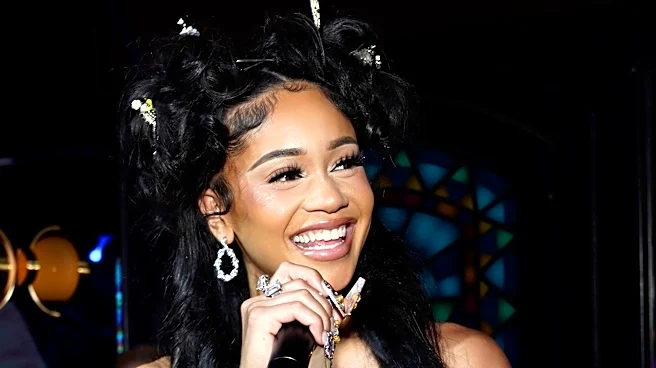
Diamont Harper, known professionally as Saweetie, is an American rapper, songwriter, and singer whose ethnic background is Filipino, Chinese, and African American. Born in Santa Clara, California, Saweetie's mother is Filipino, and her father is African American. Her
Chinese ancestry stems from her maternal grandmother. Saweetie has openly expressed pride in her mixed heritage, stating that it significantly influences both her music and her personal style. Since her rise to fame, her ethnicity has been a subject of public discussion, with some critics questioning her connection to her various backgrounds. However, Saweetie maintains that she is comfortable with her identity and does not feel compelled to conform to specific labels. She is recognized as a successful artist whose work is celebrated for its catchy melodies and empowering lyrics, serving as a role model for many, particularly those of mixed heritage.
Why It's Important?
Saweetie's public embrace of her Filipino, Chinese, and African American heritage holds significant cultural importance, especially in the U.S. entertainment industry and broader society. Her platform helps to normalize and celebrate mixed-race identities, challenging traditional notions of ethnicity and belonging. By openly discussing her background and incorporating elements of her diverse cultures into her music and style, Saweetie contributes to a more inclusive representation of American identity. This can resonate deeply with young people of mixed heritage, providing them with a visible figure who embodies pride in their multifaceted roots. Her stance against being labeled or confined by singular ethnic expectations also promotes a broader understanding of identity as fluid and personal, rather than strictly defined by external perceptions. This contributes to ongoing conversations about diversity, representation, and authenticity in popular culture.
What's Next?
As Saweetie continues her career, it is likely that her mixed heritage will remain a prominent aspect of her public persona and artistic expression. Future projects, including music releases, fashion collaborations, or public appearances, may further explore or highlight her diverse background. Her continued success could inspire other artists to more openly share and integrate their own unique cultural identities into their work, fostering a more diverse and representative entertainment landscape. Furthermore, her influence may encourage broader societal discussions about the complexities of identity in a multicultural nation, potentially leading to greater acceptance and understanding of mixed-race individuals. Her role as a role model for young people of mixed heritage is expected to grow, reinforcing the message of self-acceptance and pride in one's roots.
Beyond the Headlines
Saweetie's narrative extends beyond typical celebrity news, touching upon deeper societal themes of identity, representation, and cultural authenticity. Her experience highlights the ongoing challenges faced by individuals of mixed heritage, who often encounter pressure to align with a single ethnic group or face criticism for not being 'enough' of one culture. By confidently asserting her multifaceted identity, Saweetie implicitly challenges these societal pressures and stereotypes. Her influence can contribute to a long-term shift in how mixed-race individuals are perceived and understood in the U.S., moving towards a more nuanced appreciation of their unique cultural contributions. This also raises ethical considerations about how public figures are expected to represent their heritage and the importance of allowing individuals to define their own identities without external imposition.