






What's Happening?
Home organization specialists and interior designers are providing practical advice and innovative solutions to help individuals maximize space in smaller living areas. These strategies move beyond traditional decluttering, focusing on smart furniture
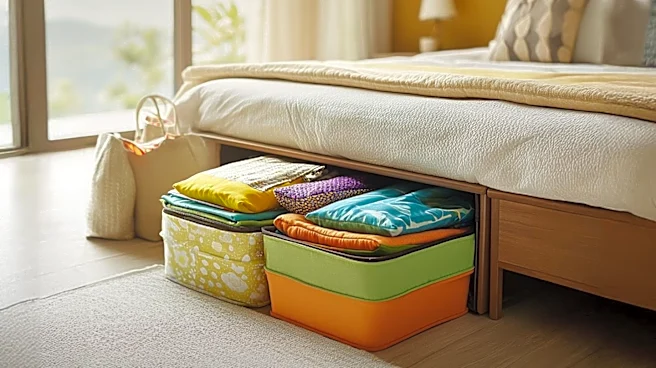
choices, effective use of vertical space, and strategic design elements. Key recommendations include utilizing nesting tables for flexible surface area, installing floating shelves to free up floor space, and customizing wall shelves in bathrooms. For closets, experts suggest using over-the-door organizers and alternating shoe placement to optimize storage. The emphasis is on transforming underutilized spaces into functional areas through thoughtful planning and affordable tools like bins, dividers, and hooks, rather than expensive renovations. Designers also suggest that bold design choices, such as oversized rugs and sweeping drapery, can paradoxically make small rooms feel larger by creating visual continuity.
Why It's Important?
The increasing trend of smaller living spaces, particularly in urban areas, makes efficient home organization crucial for improving quality of life and mental well-being. These strategies offer practical benefits by reducing clutter, enhancing accessibility, and making daily routines smoother. For consumers, adopting these hacks can lead to a more comfortable and functional home environment without the significant financial burden of moving to a larger property or undertaking extensive renovations. For the home goods and furniture industries, this trend highlights a growing market for multi-functional furniture, modular storage solutions, and space-saving accessories. Businesses that innovate in these areas stand to gain, as demand for clever storage and design solutions continues to rise in response to evolving housing trends and consumer needs for optimized living. The psychological impact of an organized home, leading to reduced stress and a clearer mind, also underscores the importance of these practical approaches.
What's Next?
As the demand for efficient living solutions continues, consumers can expect to see further innovation in multi-functional furniture and modular storage systems. Retailers and designers will likely expand their offerings to include more customizable and adaptable products that cater to diverse small-space challenges. There will be a continued focus on integrating technology into home organization, such as smart storage solutions or digital tools for space planning. Educational content, workshops, and online resources on space-saving techniques are also expected to grow, empowering more individuals to implement these strategies effectively. Additionally, the design community may further explore the psychological aspects of small-space living, developing aesthetics and layouts that promote a sense of openness and calm, moving beyond purely functional considerations to holistic well-being.
Beyond the Headlines
The shift towards maximizing small living spaces reflects broader societal trends, including urbanization, rising housing costs, and a growing emphasis on sustainable living and minimalism. Ethically, these strategies promote conscious consumption by encouraging individuals to make the most of what they have rather than constantly acquiring more. Culturally, there's a re-evaluation of what constitutes a 'comfortable' or 'ideal' home, moving away from the traditional large-house paradigm towards more efficient, thoughtfully designed compact living. This also has environmental implications, as smaller homes often require fewer resources to build, heat, and cool. The long-term impact could be a fundamental change in residential architecture and interior design, prioritizing adaptability, multi-functionality, and resource efficiency, thereby influencing urban planning and consumer behavior for decades to come.