




What's Happening?
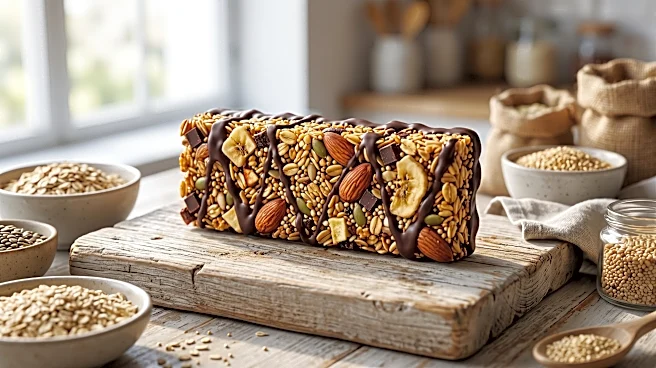
Suma Organics has launched a new Choco-Granola Bar, crafted from toasted oats, ancient grains, nuts, and dried fruit, finished with chocolate. The bar incorporates ingredients such as kiwicha (amaranth) and quinoa, along with honey and panela for natural
sweetness. Other components include peanuts, dried banana, dried apple, almonds, shredded coconut, raisins, carob, and flaxseed. The product is made in small batches using traditional preparation methods by local artisan producers in Peru. The ingredients are sourced from the Lurín Valley, an agricultural region south of Lima, known for its historical farming practices. The company emphasizes the use of organic and responsibly grown ingredients, traditional recipes, and natural sweeteners.
Why It's Important?
The introduction of Suma Organics' Choco-Granola Bar highlights a growing trend in the U.S. market for snack products that emphasize natural ingredients, ancient grains, and ethical sourcing. This product caters to consumers seeking healthier, less processed food options and those interested in the origin and production methods of their food. The use of ingredients like kiwicha and quinoa, along with panela, introduces unique nutritional profiles and flavors to the snack bar category, potentially influencing consumer preferences and driving innovation among competitors. Furthermore, by sourcing from the Lurín Valley and supporting local artisan producers, Suma Organics contributes to sustainable agricultural practices and economic development in that region, which can resonate with socially conscious consumers in the U.S.
What's Next?
The success of Suma Organics' Choco-Granola Bar could lead to an increased demand for products featuring ancient grains and ethically sourced ingredients in the U.S. market. Other food manufacturers may observe this trend and begin to incorporate similar components into their own product lines, potentially expanding the variety of healthy and sustainably produced snack options available to consumers. The company may also explore expanding its product range to include more items that highlight Peruvian ingredients and artisan craftsmanship. Additionally, the focus on supporting local producers and preserving agricultural regions like the Lurín Valley could set a precedent for other brands to adopt similar responsible sourcing strategies, further influencing the broader food industry's approach to sustainability and community engagement.
Beyond the Headlines
The launch of this granola bar reflects a broader cultural shift towards valuing authenticity, transparency, and sustainability in food production. It underscores the increasing consumer awareness regarding the environmental and social impact of their food choices. The use of ancient grains like kiwicha and quinoa also points to a renewed interest in traditional food systems and biodiversity, moving away from monoculture-dependent agriculture. This product could serve as a model for how U.S. food companies can integrate global ingredients and support international communities while meeting consumer demands for nutritious and responsibly made products. It also highlights the potential for small-batch, artisan production to compete in a market often dominated by large-scale industrial food manufacturers, emphasizing quality and unique narratives over mass production.