


What's Happening?
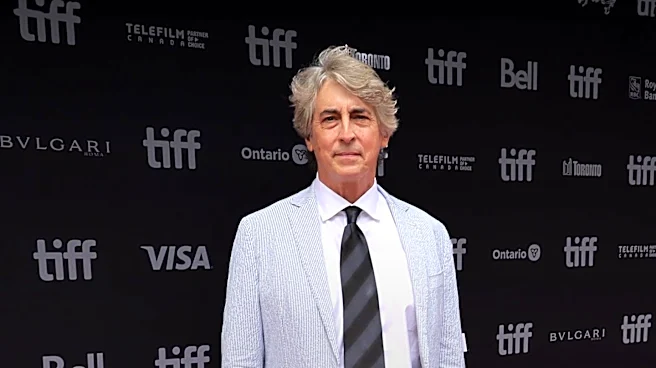
Director Alexander Payne and screenwriter David Hemingson, along with several production and distribution companies, are facing a copyright lawsuit filed by writer Simon Stephenson. Stephenson alleges that the Oscar-winning film 'The Holdovers' copied
46 story incidents from his unproduced 2013 screenplay, 'Frisco,' with 24 of these incidents appearing in the same order. The lawsuit, filed on October 28, 2026, in Los Angeles federal court, claims that Payne had access to 'Frisco' in 2013 and again in 2019 but declined to produce it, later using its story structure for 'The Holdovers.' Stephenson's complaint highlights a specific line about a medical conference in an early draft of 'The Holdovers' that he argues only makes sense in the context of his 'Frisco' screenplay, where the main character is a physician. He also points to an unusual screenplay-formatting error present in both scripts as evidence of copying. The lawsuit names producer Mark Johnson, Gran Via Productions, Honest Scholar Productions, Focus Features, Miramax, and other related entities.
Why It's Important?
This lawsuit carries significant implications for the film industry, particularly concerning intellectual property rights and the creative process. If Stephenson's claims are substantiated, it could set a precedent for how unproduced screenplays are protected and how filmmakers are held accountable for alleged plagiarism. The case highlights the challenges in distinguishing between independent creative development and unauthorized copying, especially when narrative similarities arise. For studios and production companies, a ruling in favor of Stephenson could lead to increased scrutiny of script development processes and potentially higher legal risks associated with adapting or developing new projects. Conversely, if Payne and his co-defendants prevail, it could reinforce existing legal interpretations of copyright in creative works, potentially making it harder for writers to prove infringement without direct evidence of copying. The outcome will influence how writers, directors, and producers approach collaboration and the protection of their original ideas in Hollywood.
What's Next?
The lawsuit will proceed in a federal court in Los Angeles, where Simon Stephenson will attempt to prove that the similarities between 'Frisco' and 'The Holdovers' resulted from unauthorized copying. Stephenson is seeking damages, attorney's fees, and an injunction against further alleged copyright infringement. The defendants, including Alexander Payne, who previously dismissed the accusations as "the stupidest thing in the world," will likely present their defense, potentially arguing for independent creation or that any similarities fall within the realm of common narrative tropes. The legal proceedings will involve a detailed comparison of both screenplays and an examination of the timeline of their development and Payne's access to 'Frisco.' The Writers Guild of America had previously received plagiarism allegations from Stephenson in March 2024, indicating a prior attempt to address the dispute. The court's decision will ultimately determine the legal and financial consequences for all parties involved.
Beyond the Headlines
This case delves into the complex ethical and legal boundaries of creative inspiration versus intellectual property theft in the entertainment industry. The concept of 'idea-expression dichotomy' in copyright law, which protects the expression of an idea but not the idea itself, will be central to the court's deliberations. The lawsuit also brings to light the power dynamics within Hollywood, where established directors and studios may face accusations from less prominent writers. The alleged removal or concealment of copyright-management information, as claimed by Stephenson, adds another layer of complexity, suggesting a potential intent to obscure the original source. Beyond the immediate financial and legal outcomes, this case could influence industry practices regarding script submissions, development agreements, and the transparency required in crediting original works. It underscores the ongoing tension between the collaborative nature of filmmaking and the need to protect individual creative contributions.