



What's Happening?
The Tad AI music generator is transforming the music creation process by offering a simplified, AI-driven experience. This platform aims to reduce the technical complexities traditionally associated with music production, allowing creators to focus more
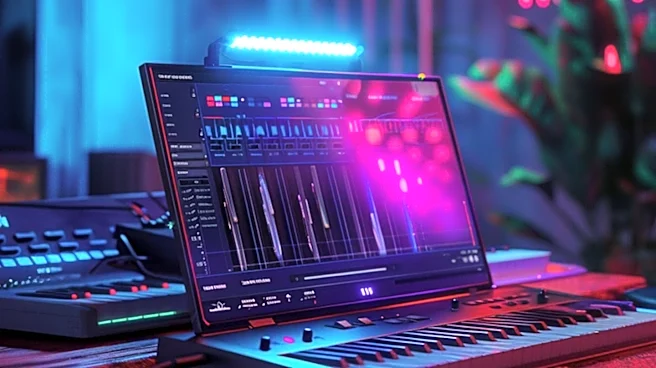
on their artistic vision. It provides features such as instant AI song generation, intelligent lyric assistance, and AI vocal and sound creation. Users can input ideas, themes, or musical tastes, and the AI assists in assembling these inputs into full-fledged musical compositions. The platform also offers creative controls through custom settings like genre, vibe, instrument, scene, and rhythm, enabling users to direct the output without requiring sophisticated production skills. Additionally, artists can provide up to 3,000 characters of text and audio references to guide the AI, ensuring results align with their creative expectations. Tad AI is designed to be versatile, catering to solo artists, video producers, marketing teams, and small creative teams by offering tools for experimentation, original soundbank development, and rapid audio creation for campaigns.
Why It's Important?
The emergence of tools like Tad AI signifies a significant shift in the music industry, democratizing music creation and making it accessible to a broader audience beyond professional musicians and producers. This accessibility can foster a surge in new musical content and diverse artistic expressions, potentially disrupting traditional production models. For independent artists and small creative teams, it lowers the barrier to entry, allowing them to produce high-quality audio without extensive technical expertise or expensive equipment. This could lead to more independent music entering the market, challenging the dominance of major labels. For marketing and video production, the ability to rapidly generate custom, royalty-free audio can streamline content creation, enhance branding, and reduce licensing costs. However, it also raises questions about the value of human artistry versus AI-generated content and the potential for market saturation with easily produced music. The emphasis on royalty-free creation also impacts traditional music publishing and licensing models, potentially shifting revenue streams and intellectual property discussions.
What's Next?
The future will likely see continued advancements in AI music generation, with platforms like Tad AI becoming even more sophisticated in understanding and executing complex musical ideas. As the technology evolves, there will be an ongoing debate and development of policies regarding the authenticity and ownership of AI-generated music. The music industry may need to adapt its frameworks for copyright, royalties, and artist recognition to accommodate this new paradigm. We can expect to see more integration of AI tools into existing digital audio workstations (DAWs) and creative suites, making AI assistance a standard part of the production workflow. Furthermore, the distinction between human-created and AI-assisted music will become increasingly blurred, prompting consumers and industry professionals to re-evaluate what constitutes 'original' music. The growth of AI music detectors, such as those with high accuracy in identifying AI-generated tracks, suggests a future where verification of music origin could become a standard practice, especially in official charts and professional contexts.
Beyond the Headlines
The rise of AI music generators like Tad AI touches upon profound ethical and philosophical questions regarding creativity, authorship, and the essence of art. If AI can compose and produce music that is indistinguishable from human-made creations, what does that mean for the human creative spirit? This technology challenges the traditional notion of the artist as the sole originator of a work, prompting a re-evaluation of collaboration between humans and machines. There's a potential for AI to become a powerful co-creator, pushing the boundaries of musical genres and styles in ways humans alone might not conceive. However, it also raises concerns about the potential devaluation of human artistic labor and the economic impact on musicians and composers. The legal and cultural implications of 'royalty-free' AI-generated music are also significant, as it could lead to a glut of content that bypasses traditional compensation structures, potentially undermining the livelihoods of human artists. The ongoing discussion about where to draw the line between AI assisting human creativity and replacing it will shape the future landscape of the music industry and artistic expression.