







What's Happening?
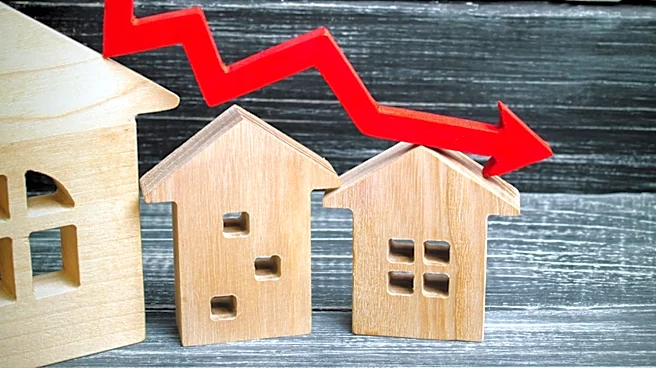
Mortgage rates in the U.S. have experienced a slight decrease, according to Freddie Mac. As of this week, the average rate for a 30-year fixed-rate mortgage stands at 7.18%, a reduction from 7.24% recorded last week. This marks a notable change compared
to the 6.22% rate observed a year ago. Similarly, the 15-year fixed-rate mortgage also saw a dip, settling at 6.57% this week, down from 6.6% last week. A year prior, the rate for a 15-year fixed-rate mortgage was 5.5%. These figures indicate a modest downward trend in mortgage interest rates across key categories, offering some relief to potential homebuyers and those looking to refinance.
Why It's Important?
The slight decrease in mortgage rates carries significant implications for the U.S. housing market and broader economy. Lower rates can make homeownership more accessible by reducing monthly mortgage payments, potentially stimulating demand in a market that has faced challenges due to high interest rates. This could encourage more prospective buyers to enter the market, leading to increased home sales and construction activity. For current homeowners, a sustained downward trend could open opportunities for refinancing, allowing them to secure lower interest rates and reduce their financial burden. Conversely, if this trend is short-lived, its impact might be minimal. The housing sector is a crucial component of the U.S. economy, and fluctuations in mortgage rates directly influence consumer spending, investment in real estate, and the overall economic outlook. Lenders and financial institutions will also be closely watching these trends, as they affect their loan portfolios and profitability.
What's Next?
The immediate future will likely see continued monitoring of economic indicators by financial institutions and potential homebuyers. If the downward trend in mortgage rates persists, it could lead to a gradual increase in housing market activity, including more home purchases and refinancing applications. However, any shifts in inflation data or Federal Reserve policy could quickly alter this trajectory. Lenders may adjust their offerings to remain competitive, potentially introducing new mortgage products or incentives. Real estate agents and developers will be observing buyer sentiment, which could improve with more favorable borrowing conditions. The coming weeks will be critical in determining if this slight dip is an anomaly or the beginning of a more sustained period of lower mortgage rates, influencing decisions for both consumers and industry stakeholders.
Beyond the Headlines
Beyond the immediate financial implications, the movement in mortgage rates reflects underlying economic forces and can influence long-term societal trends. Persistently high rates can exacerbate housing affordability crises, particularly for first-time homebuyers and lower-income individuals, potentially widening wealth disparities. A sustained period of lower rates, even if modest, could offer a window of opportunity to address some of these affordability challenges, making homeownership more attainable for a broader segment of the population. This could also impact migration patterns, as individuals and families might be more inclined to move to areas with more affordable housing options. Furthermore, the stability or volatility of mortgage rates can influence consumer confidence, affecting spending habits beyond housing and contributing to the overall economic sentiment. The interplay between interest rates, housing supply, and demand will continue to shape the landscape of American communities and individual financial well-being.