





What's Happening?
Mondelēz International, PepsiCo, and pladis are participating in a Belgium-wide trial to assess the effectiveness of invisible digital watermarks in improving the recycling of flexible food packaging. This initiative aims to overcome a significant barrier
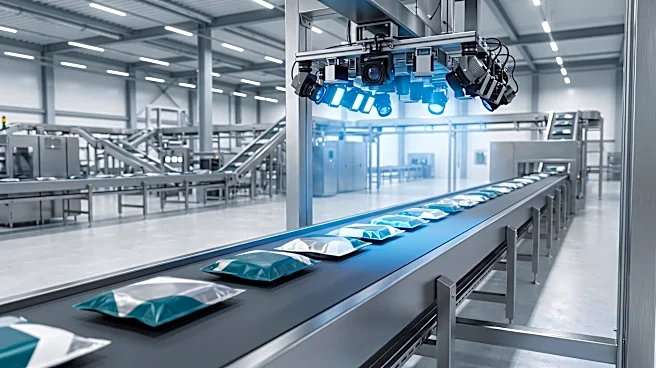
to circular food packaging by enabling more accurate identification and sorting of materials. The trial will evaluate how Digimarc watermarks, imperceptible codes added during the printing process, perform on various plastic food packaging collected through Belgium’s household recycling system. These watermarks are designed to be read by specialized sorting equipment, providing crucial information about the packaging's material type and whether it previously contained food. This data is essential for achieving food-grade recycling, particularly with mechanical processes. The project is part of the HolyGrail 2030 – Circular Packaging Consortium, which involves approximately 79 companies and organizations exploring intelligent sorting and new recycling technologies. The Belgian sorting trials are led by Fost Plus, with sorted film bales sent to a sorting center in Germany where high-resolution cameras read the digital watermarks. This marks Europe's first national-scale trial involving flexible post-consumer packaging collected through a household recycling system.
Why It's Important?
The accurate identification and sorting of flexible food packaging are critical for increasing the availability and affordability of recycled plastic, especially in the context of new regulations. The European Packaging and Packaging Waste Regulation, set to introduce recycled content requirements for certain plastic food packaging categories starting in 2030, mandates a 10 percent minimum recycled content for some contact-sensitive packaging applications. This trial directly addresses the need for practical solutions that can function within real-world collection, sorting, and recycling systems to meet these ambitious targets. Flexible plastic packaging has historically been challenging to recycle into high-quality, food-grade applications due to stringent quality and safety requirements. By providing a method for precise sorting, digital watermarking could significantly enhance the circularity of food packaging, reducing waste and promoting sustainable practices. The collaboration among major brands, technology providers, and recycling stakeholders underscores the industry-wide effort required to achieve these environmental goals, demonstrating a commitment to developing scalable solutions for a more circular economy.
What's Next?
The ongoing trial in Belgium will continue to gather real-life technical learning to inform the value chain on increasing the availability, compatibility, and affordability of recycled plastic derived from new technologies. The insights gained from this market demonstration are expected to provide crucial evidence for scaling up the digital watermarking approach across the European Union and potentially beyond. As the HolyGrail 2030 initiative progresses, the findings will help determine the feasibility and effectiveness of integrating digital watermarking into broader recycling infrastructures. The success of this trial could pave the way for wider adoption of intelligent sorting technologies, enabling the industry to meet future recycled content targets and advance towards a more circular economy for flexible food packaging. Stakeholders will be closely monitoring the results to assess the potential for widespread implementation and the subsequent impact on recycling rates and the supply of high-quality recycled materials.
Beyond the Headlines
This initiative highlights a broader shift in the packaging industry towards innovative solutions for sustainability and circularity. The use of digital watermarks represents a technological advancement that could fundamentally change how packaging waste is managed, moving beyond traditional sorting methods. It also underscores the increasing pressure on companies to adopt more environmentally responsible practices, driven by both regulatory mandates and consumer demand. The collaborative nature of the HolyGrail 2030 consortium demonstrates that achieving significant progress in packaging circularity requires cross-industry cooperation and shared investment in research and development. Furthermore, the focus on food-grade recycling addresses a critical challenge, as recycled materials for food contact applications must meet exceptionally high safety standards. This trial could set a precedent for how complex waste streams are handled globally, influencing future policy and technological developments in waste management and resource recovery.