





What's Happening?
The rapid expansion of data centers in the U.S., fueled by the artificial intelligence (AI) boom, is causing a significant tightening in domestic steel supplies. This surge in demand for structural sections, reinforcing bar, and heavy plate, essential
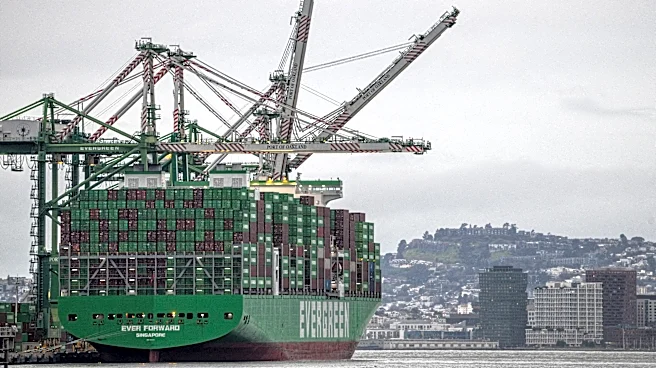
for data center construction, has led U.S. steel buyers to increasingly turn to Asian imports. The spread between U.S. Midwest hot-rolled coil and imported material has widened, creating arbitrage opportunities and increasing activity from suppliers in Vietnam, South Korea, Japan, and India. Market participants anticipate that this tightness will persist as investment in data centers and grid infrastructure continues, keeping the import share elevated despite existing tariffs and anti-dumping duties that narrow the landed-cost advantage of foreign steel.
Why It's Important?
The tightening U.S. steel supply due to data center construction has far-reaching implications for the domestic manufacturing and construction sectors. Increased reliance on imports can affect the competitiveness of U.S. steel producers and potentially lead to higher costs for other industries that depend on steel. This situation also highlights the broader impact of the AI race on global commodity markets, as the construction and operation of data centers require vast quantities of raw materials beyond steel, including copper and aluminum for electrical infrastructure, cooling systems, and power networks. The rising demand for these commodities, particularly copper, which already faces supply constraints due to declining ore grades and lengthy project development timelines, could exacerbate existing market pressures and drive up prices across various sectors.
What's Next?
Market participants expect the tightness in U.S. steel supply to continue as data center and grid investments remain robust. This sustained demand will likely keep the import share of steel elevated, potentially leading to ongoing discussions about trade policies, tariffs, and domestic production capacities. The increased demand for copper and aluminum for AI infrastructure will also put additional pressure on mining sectors, which are already grappling with supply challenges. Miners may need to accelerate exploration and development efforts, but the long lead times for new projects mean that supply constraints could persist for the foreseeable future. This trend could also spur innovation in material science, seeking alternative, more sustainable, or readily available materials for data center construction.
Beyond the Headlines
The impact of data center demand on U.S. steel supply is a microcosm of how the AI revolution is reshaping global supply chains and resource allocation. The need for massive physical infrastructure to support digital advancements creates a ripple effect across traditional industries like mining and manufacturing. This situation raises critical questions about resource sustainability, national industrial policy, and the environmental footprint of the digital age. As the AI boom continues, there will be increasing pressure to find more efficient and sustainable ways to build and power data centers, potentially driving investment in green steel production, circular economy principles for materials, and advanced energy solutions. The reliance on imports also underscores vulnerabilities in domestic supply chains for critical materials, prompting a reevaluation of industrial self-sufficiency in an increasingly interconnected world.