



What's Happening?
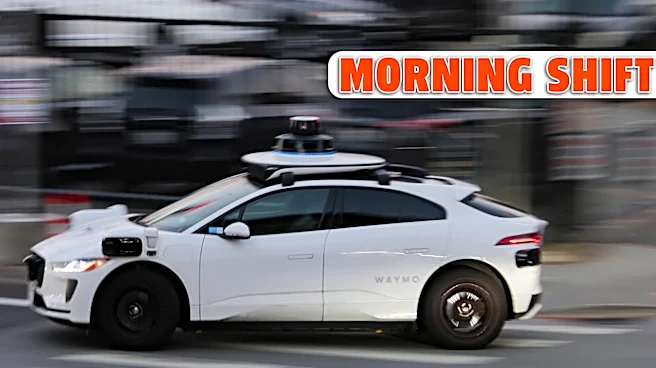
Waymo, the autonomous vehicle company, is transitioning to a direct booking model for its robotaxi services in Austin and Atlanta, starting January 2028. Currently, riders in these cities can only book Waymo vehicles through the Uber app. Waymo co-CEO
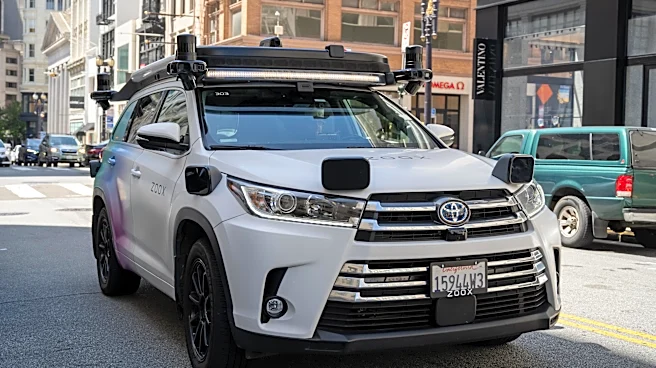
Tekedra Mawakana indicated this move to Bloomberg, signifying Waymo's intent to offer rides directly via its own application. In contrast, Zoox, another autonomous vehicle company, has begun matching riders with its robotaxis through Uber in Las Vegas, while also maintaining its own app for direct bookings. These differing strategies highlight varied approaches to market penetration and customer engagement within the burgeoning autonomous ride-sharing sector.
Why It's Important?
These developments underscore a critical juncture in the autonomous vehicle industry, particularly concerning the relationship between AV developers and ride-sharing platforms. Waymo's decision to go direct in Austin and Atlanta suggests a desire to control the customer experience, data, and revenue streams more fully, potentially reducing its reliance on intermediaries like Uber. This could lead to increased competition for Uber in markets where Waymo operates independently. Conversely, Zoox's dual approach of partnering with Uber while also offering its own app indicates a strategy to maximize reach and accessibility, leveraging Uber's extensive user base while building its direct brand presence. The varying strategies will likely influence market dynamics, customer adoption rates, and the profitability models for both AV companies and ride-sharing platforms. The shift also impacts traditional ride-share drivers, with data showing varied effects on working hours and earnings in cities with AV operations.
What's Next?
The coming years will reveal the effectiveness of these divergent strategies. Waymo's direct-to-consumer model in Austin and Atlanta will test its ability to attract and retain customers without Uber's platform. This will require significant investment in marketing, customer service, and app development. For Zoox, its partnership with Uber in Las Vegas will demonstrate whether a 'co-opetition' model, where AV companies both collaborate and compete with ride-sharing giants, can be sustainable and beneficial. Uber, in turn, will need to adapt its platform strategy to accommodate both direct AV services and integrated partnerships, potentially by offering more flexible or specialized options for autonomous vehicle providers. The outcomes in these cities will provide valuable insights into the future structure of the autonomous mobility market and the optimal pathways for scaling these services.
Beyond the Headlines
The evolving relationships between autonomous vehicle companies and ride-sharing platforms reflect a deeper struggle for control over the future of urban mobility. The 'platform fee rate' data, which shows a decrease in AV-operating cities compared to an increase elsewhere, suggests that the introduction of robotaxis can alter the economic landscape for ride-sharing. This could lead to pressure on traditional platforms to reduce their take rates or offer more competitive incentives to human drivers. Furthermore, the varying impact on driver working hours in different AV cities (e.g., increased hours in Phoenix and San Francisco, decreased in Austin and Los Angeles) indicates that the integration of autonomous vehicles is not uniform and depends on local market conditions and regulatory environments. This complex interplay will necessitate continuous adaptation from all stakeholders, including insurers who will need to re-evaluate risk pricing for mixed fleets of human and autonomous vehicles.