







What's Happening?
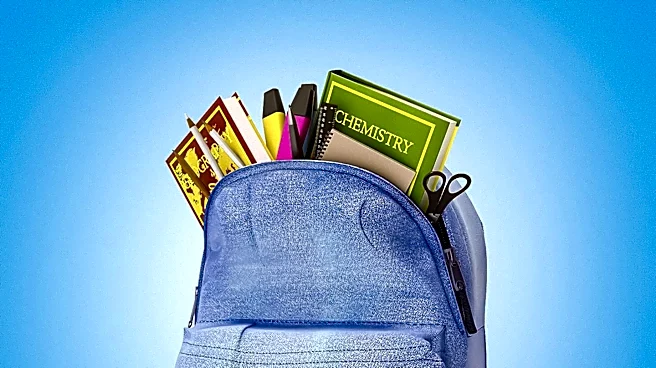
Teachers are cautioning parents against buying certain back-to-school supplies that often go unused, emphasizing the importance of consulting official school supply lists before making purchases. Common items discouraged include fidget pencil boxes, novelty
glue sticks, rolling backpacks, oversized organizers, and oversized pencil cases. Many schools prefer traditional pencils over mechanical ones and often require wired headphones instead of wireless earbuds. Toy-like stationery is frequently cited as a distraction in the classroom, and large pen sets typically exceed the practical needs for schoolwork. This guidance aims to help parents avoid unnecessary expenses and ensure students have the most practical and requested basics that align with classroom and locker constraints, reflecting typical teacher preferences and school rules.
Why It's Important?
This guidance is important for several reasons, primarily impacting household budgets and classroom efficiency. For families, adhering to teacher recommendations can prevent wasted spending on items that won't be used, allowing resources to be allocated more effectively. This is particularly significant for lower-income families who may struggle with the financial burden of school supplies. For educators, having students equipped with appropriate and non-distracting materials fosters a more conducive learning environment. When students bring in items like toy-like stationery or oversized organizers, it can lead to disruptions and storage issues, diverting valuable instructional time. By streamlining supply purchases, schools can ensure uniformity and practicality, which supports teachers in maintaining order and focusing on education rather than managing inappropriate items. This also highlights a broader issue of consumer behavior driven by marketing versus actual educational needs.
What's Next?
In response to these recommendations, parents are advised to wait for official school supply lists, typically distributed by schools or individual teachers before the academic year begins. This proactive step will ensure that purchases are aligned with specific classroom requirements, preventing the acquisition of unnecessary or unapproved items. Retailers may see a shift in purchasing patterns, with a potential decrease in demand for novelty or oversized school supplies and an increased focus on basic, practical items. Schools and parent-teacher organizations might also reinforce these guidelines through clearer communication channels, possibly by providing more detailed lists or hosting information sessions to guide parents on appropriate school supply choices. This could lead to a more standardized approach to back-to-school shopping, benefiting both families and educational institutions.
Beyond the Headlines
The advice from teachers regarding school supplies touches upon deeper societal and economic implications. It highlights the commercialization of education, where marketing often pushes non-essential or even counterproductive items onto parents. This trend can exacerbate economic disparities, as families feel pressured to purchase trendy but unnecessary items, adding to the financial strain. Furthermore, the emphasis on practical, non-distracting supplies underscores the evolving challenges in maintaining focus in classrooms, especially with the proliferation of gadgets and novelty items. This situation also reflects a broader cultural discussion about consumerism and the true needs of students in an educational setting, prompting a re-evaluation of what constitutes essential learning tools versus luxury or entertainment items in schools.