







What's Happening?
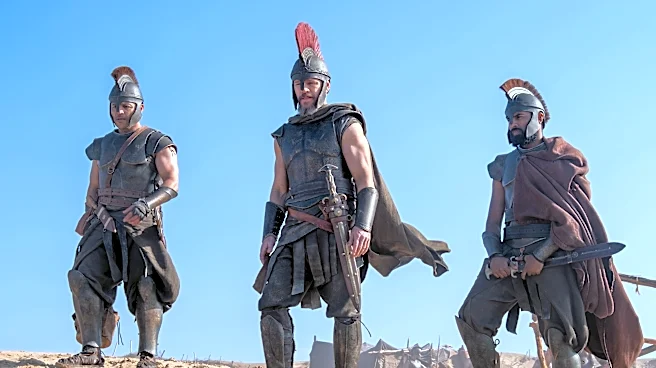
Christopher Nolan's upcoming film 'The Odyssey' has sparked controversy due to its filming location in Western Sahara, a region occupied by Morocco. The decision to shoot in the city of Dakhla has been criticized for normalizing Morocco's 50-year occupation
of the territory. Sahrawi campaigners and filmmakers have called for a boycott of the film, arguing that it legitimizes the occupation and ignores the plight of the Indigenous Sahrawi people. The Moroccan government has been accused of using the film to promote a romanticized image of the region, while Sahrawi journalists face imprisonment for documenting human rights abuses.
Why It's Important?
The controversy surrounding 'The Odyssey' highlights the ongoing geopolitical tensions in Western Sahara, a region with significant historical and cultural implications. The film's production in an occupied territory raises ethical questions about the role of international cinema in political conflicts. By choosing to film in Western Sahara, Nolan's production is seen as supporting Morocco's claims over the region, potentially influencing international perceptions and undermining the Sahrawi people's struggle for self-determination. This situation underscores the broader issue of cultural exploitation and the responsibilities of filmmakers in conflict zones.
What's Next?
As the film approaches its release, the calls for a boycott may gain momentum, potentially impacting its box office performance. The controversy could lead to increased scrutiny of Hollywood's involvement in politically sensitive regions. It remains to be seen whether Nolan or the production companies will address the criticisms or make any changes to the film. The situation may also prompt discussions within the film industry about ethical guidelines for shooting in disputed territories and the importance of obtaining consent from Indigenous populations.
Beyond the Headlines
The use of Western Sahara as a filming location without the consent of the Sahrawi people reflects broader patterns of cultural appropriation and exploitation by Western industries. This incident highlights the need for greater awareness and sensitivity towards the rights and narratives of Indigenous communities. The film industry, as a powerful cultural force, has the potential to either perpetuate or challenge existing power dynamics, making ethical considerations crucial in its operations.