






What's Happening?
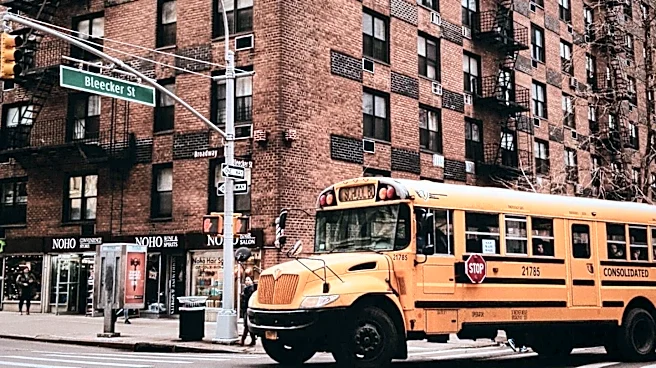
Acadia Retail Trust, a publicly traded entity, has finalized the acquisition of a retail co-op located at 371-373 Bleecker Street in New York City for $10 million. This transaction follows their recent purchase of a townhouse at 385 Bleecker for $9.99
million. The newly acquired retail co-op houses the sportswear apparel brand Redvlany and is situated within a pair of five-story, mixed-use buildings. The deal was an off-market transaction, with JLL representing the seller, Status Capital, led by Ralph Sitt and David Sitt. The JLL team involved in the negotiation included Ethan Stanton, Brendan Maddigan, Mike Mazzara, and Hall Oster. This acquisition signifies Acadia Retail Trust's continued investment in Bleecker Street storefronts, adding to their growing presence in the area.
Why It's Important?
This acquisition by Acadia Retail Trust underscores a strategic investment trend in prime retail locations within New York City. The purchase of the Bleecker Street retail co-op, along with previous acquisitions, indicates a belief in the long-term value and demand for physical retail spaces in specific, high-profile urban areas. For the U.S. retail real estate market, this suggests that despite broader shifts towards e-commerce, well-located and desirable commercial properties continue to attract significant investment. JLL senior managing director Ethan Stanton highlighted that retail investors are seeking locations with genuine tenant demand, limited supply, and potential for future growth. This approach benefits property owners and developers who can identify and secure such assets, while potentially impacting smaller, independent retailers who may face increased competition or rising rents in these sought-after areas.
What's Next?
Acadia Retail Trust is likely to continue its strategy of acquiring prime retail properties in areas with strong tenant demand and limited supply. This ongoing investment could lead to further consolidation of retail spaces under larger trusts, potentially influencing rental rates and the types of businesses that can afford to operate in these high-value locations. The focus on areas like Bleecker Street and Williamsburg's North Sixth Street suggests a continued belief in the resilience and growth potential of specific urban retail corridors. Future developments may include further renovations or re-tenanting of these properties to maximize their value, aligning with the long-term vision of investors who anticipate these streets will strengthen over the next five to ten years. This trend could also encourage other retail investors to target similar high-demand urban markets.
Beyond the Headlines
The continued investment by entities like Acadia Retail Trust in specific urban retail corridors like Bleecker Street reflects a broader narrative about the evolving landscape of urban commerce. While many discussions focus on the challenges faced by brick-and-mortar retail, these acquisitions highlight a counter-narrative where strategic, well-capitalized investors are doubling down on prime locations. This could lead to a more curated and upscale retail environment in these areas, potentially altering the cultural fabric and accessibility for diverse businesses. The emphasis on 'real tenant demand' and 'limited supply' also points to a market where scarcity drives value, potentially pushing out smaller, independent businesses in favor of larger brands that can afford premium rents. This trend raises questions about urban gentrification and the preservation of local character in historically significant commercial districts.