










What's Happening?
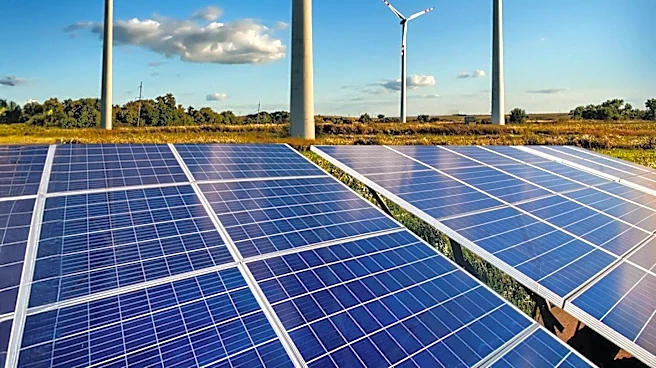
The global solar cell production equipment market is entering a transformative phase, driven by technological advancements and capacity expansion. According to a recent report, the market is expected to stabilize at an annual spending range of USD 15-20
billion from 2026 to 2030, with a modest uptick toward 2035. This growth is fueled by the migration to n-type cell architectures, such as TOPCon and heterojunction (HJT), which require advanced deposition and metallization tools. The market is also supported by policy-driven localization efforts in the U.S., Europe, and India, aiming to reduce import dependence and boost local manufacturing capabilities.
Why It's Important?
The shift towards more advanced solar cell technologies and the expansion of manufacturing capacity are critical for meeting global renewable energy targets. As countries strive to increase their solar energy output, the demand for efficient and high-capacity solar cell production equipment is expected to rise. This trend presents significant opportunities for equipment manufacturers and investors, particularly in regions like the U.S. and Europe, where policy incentives are encouraging local production. The growth of the solar cell production equipment market is likely to contribute to the broader adoption of solar energy, supporting efforts to reduce carbon emissions and combat climate change.
What's Next?
The solar cell production equipment market is expected to continue evolving as new technologies, such as tandem and perovskite-silicon cells, enter commercial production. These advancements could drive further demand for specialized equipment and create new opportunities for innovation. Additionally, the ongoing policy support in key regions is likely to sustain market growth and encourage the development of local supply chains. Stakeholders in the solar industry will need to adapt to these changes and invest in new technologies to remain competitive in the rapidly evolving market.