





What's Happening?
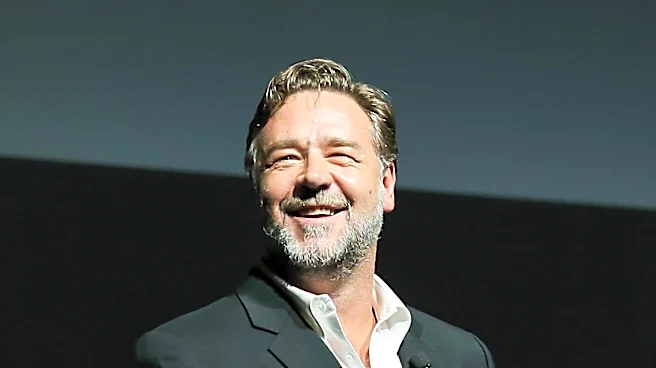
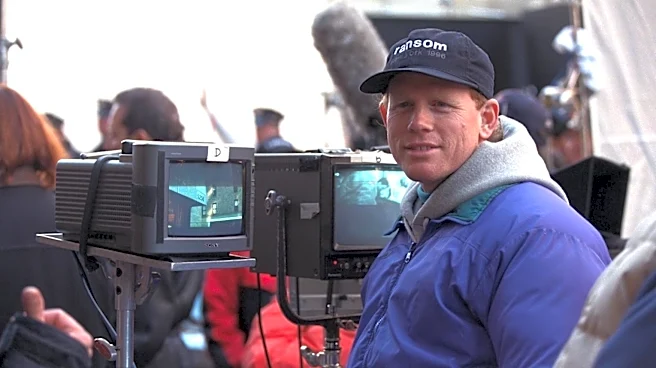
Director Ron Howard recently confirmed that actor Russell Crowe's request to shoot the 2001 film 'A Beautiful Mind' in chronological order added approximately $1 million to the movie's budget. Howard, speaking to People magazine, stated that he initially
had to 'dig in with the studio' to secure the additional funding but ultimately believed it was 'the right kind of investment.' Crowe, who portrayed mathematician John Forbes Nash Jr. struggling with schizophrenia, felt that filming sequentially would allow him to naturally develop the character's complex psychiatric journey. This approach, while uncommon for most films that shoot out of sequence for efficiency, required two separate trips to Princeton, N.J., contributing to the increased production costs. The film went on to win four Academy Awards, including Best Picture and Best Director for Howard.
Why It's Important?
This revelation highlights the significant impact an actor's creative input can have on a major film production, both artistically and financially. Russell Crowe's insistence on a sequential shooting schedule, despite the substantial cost increase, underscores a commitment to character development that ultimately contributed to the film's critical success, including four Oscars. For the film industry, it demonstrates that investing in an actor's process, even at a premium, can yield significant artistic dividends and critical acclaim. It also showcases the collaborative nature of filmmaking, where a director like Ron Howard was willing to advocate for an unconventional approach based on an actor's artistic vision. This decision ultimately paid off, solidifying 'A Beautiful Mind' as a highly regarded and award-winning picture.
What's Next?
The discussion surrounding the sequential filming of 'A Beautiful Mind' serves as a case study in the film industry, potentially influencing future production decisions where complex character arcs are central. While not every film can afford or would benefit from such an approach, the success of 'A Beautiful Mind' may encourage directors and studios to consider similar investments in artistic integrity, especially for projects with high dramatic stakes. The 25th-anniversary 4K remastering of the film, hitting theaters, will allow new and old audiences to appreciate the nuances of Crowe's performance, which was aided by this unique production choice. This story reinforces the value of artistic collaboration and the potential for significant returns on investments made in the creative process.
Beyond the Headlines
The decision to shoot 'A Beautiful Mind' sequentially, despite the added cost, delves into the deeper philosophical aspects of method acting and character immersion. For an actor like Russell Crowe, portraying a character with a deteriorating mental state, the chronological progression of filming allowed for an organic and authentic portrayal of John Nash's struggle with schizophrenia. This approach goes beyond mere technical efficiency, touching upon the psychological and emotional journey an actor undertakes. It highlights the tension between artistic purity and commercial constraints in filmmaking, where sometimes, the 'right kind of investment' isn't just financial but also an investment in the integrity of the performance. This choice ultimately contributed to the film's enduring legacy and its ability to resonate deeply with audiences, showcasing the profound impact of an actor's process on the final cinematic product.