
What's Happening?
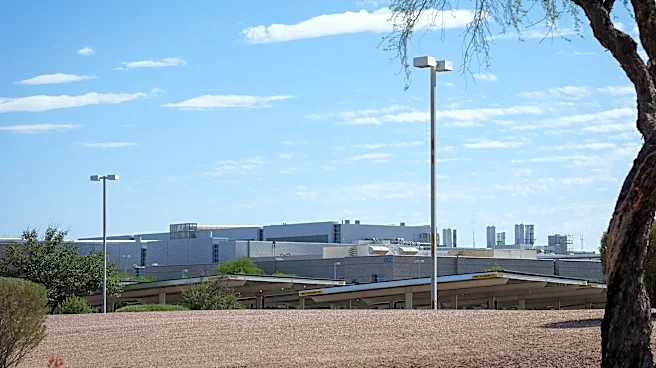
The Israeli Ministry of Finance has canceled a grant of NIS 1.3 billion to Intel's chip production facility in Kiryat Gat. This decision follows a two-year freeze on construction at the site, which was
initially planned to expand with two new clean rooms. The freeze was attributed to Intel's cash flow difficulties and geopolitical tensions in the Middle East. Despite the cancellation, a separate grant of NIS 1.06 billion remains in place, contingent on Intel resuming its investment in the facility. The Kiryat Gat plant is notable for its use of 10 nanometer 'Intel 7' technology, a key component in Intel's global AI production processes.
Why It's Important?
The cancellation of the grant is significant as it reflects the challenges faced by multinational corporations in maintaining and expanding operations amid financial and geopolitical uncertainties. For Intel, this development could impact its strategic positioning in the global semiconductor market, particularly as it shifts focus to newer technologies in other locations like Ireland. For Israel, the decision underscores the complexities of balancing economic incentives with fiscal responsibility, especially in a high-stakes industry like semiconductor manufacturing. The move may also influence future foreign investments in the region, as companies weigh the risks of geopolitical instability.
What's Next?
Intel has indicated that its expansion plans in Israel are under review, suggesting that future investments will depend on market demand. The Israeli government may need to reassess its approach to attracting and retaining high-tech investments, possibly by offering more flexible or conditional incentives. Stakeholders, including local contractors and technology firms, will be closely monitoring Intel's next steps, as any resumption of construction could have significant economic implications for the region.