




What's Happening?
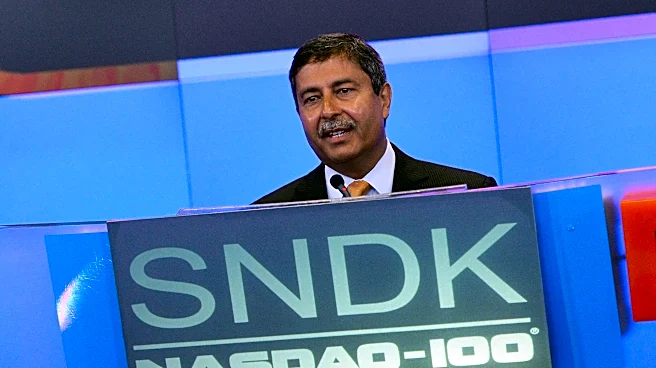
SanDisk (NASDAQ:SNDK) executed an 8-for-1 stock split on November 19, which resulted in each existing share being replaced by eight new shares, each valued at one-eighth of the pre-split price. This move is primarily cosmetic, aimed at making stock options
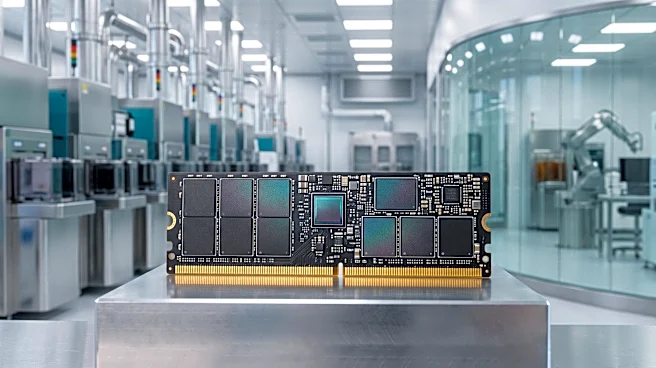
more accessible for employees at reasonable prices. The company's decision to split its stock comes as it experiences significant success in the current market, driven by a high demand for memory chips. The artificial intelligence (AI) infrastructure build-out has consumed available production capacity, allowing SanDisk to charge premium prices for its products. This favorable market condition has led to a substantial increase in profit margins, with recent results showing a 73% profit margin, indicating exceptional profitability for the company. The AI build-out is anticipated to continue for several more years, suggesting sustained demand for memory products.
Why It's Important?
SanDisk's stock split and its underlying business success highlight the immense impact of the AI boom on the semiconductor manufacturing industry. The ability to charge premium prices due to supply shortages translates directly into soaring profit margins, benefiting shareholders and reinforcing the company's market position. This situation underscores the critical role memory chips play in the expanding AI infrastructure, making companies like SanDisk essential suppliers. However, this also means consumers and AI hyperscalers face significantly higher prices for devices and data center components. The ongoing supply constraint issues, despite planned production expansions by SanDisk and its peers, indicate that the demand surge from AI is unprecedented, potentially leading to prolonged periods of high profitability for memory chip manufacturers but also raising concerns about potential overbuilding of capacity in the long term.
What's Next?
The AI infrastructure build-out is expected to continue for several more years, suggesting that SanDisk and other memory chip manufacturers will likely continue to benefit from high demand and premium pricing. While companies like SanDisk are planning production expansions, there remains uncertainty about whether these expansions will be sufficient to meet the escalating demand or if they risk creating an oversupply in the future. The cyclical nature of the memory chip industry means that periods of strong demand are often followed by phases of overcapacity. Investors will be closely watching for signs of market saturation or shifts in AI development that could impact demand for memory products. The company's ability to manage its production capacity in response to evolving market needs will be crucial for sustained profitability.
Beyond the Headlines
The current boom in the memory chip market, exemplified by SanDisk's profitability, reveals a significant economic ripple effect of the AI revolution. While beneficial for manufacturers, it creates cost pressures for consumers and businesses reliant on these components, potentially influencing the pace of technological adoption and innovation in other sectors. The discussion around potential overbuilding of production capacity highlights a classic economic dilemma in cyclical industries: how to balance capitalizing on current demand with avoiding future gluts. This situation also brings to light the strategic importance of memory chip supply chains, as any disruptions or significant price fluctuations can have far-reaching consequences across the global technology landscape, impacting everything from consumer electronics to advanced data centers.