







What's Happening?
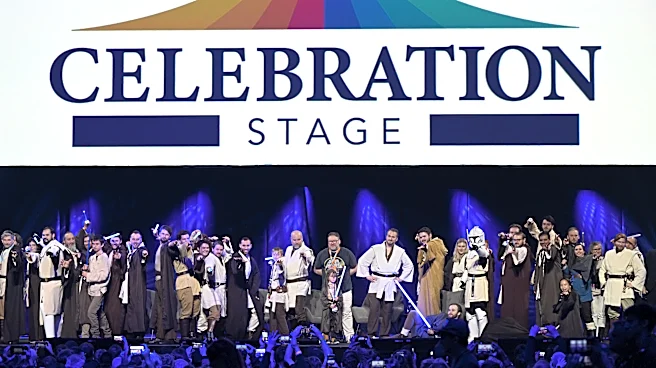
Actor Hayden Christensen, known for his role as Anakin Skywalker/Darth Vader in the 'Star Wars' franchise, recently shared a peculiar incident during an L.A. Comic Con appearance. Years ago, a burglar broke into his home while Christensen was on the phone,
awaiting a friend. Upon encountering the intruder, who was carrying Christensen's belongings, the burglar recognized the actor. Instead of continuing the robbery, the individual apologized and returned the stolen items. Christensen recounted that the burglar claimed to be in a difficult situation, attempting to acquire money for a train ticket home. Displaying compassion, Christensen offered the man clothes for job hunting and proposed to buy his train ticket the following day, though the burglar never returned. Christensen concluded his story with a lighthearted warning to potential future intruders, stating, 'Please don't try to burglarize my house again. I've got great security cameras.'
Why It's Important?
This incident, while anecdotal, highlights an unusual intersection of celebrity and crime, where personal recognition altered the course of a criminal act. It underscores the pervasive influence of popular culture and how public figures are perceived, even by those engaged in illicit activities. For Christensen, the event became a memorable fan interaction, albeit under extraordinary circumstances. More broadly, the story touches upon themes of empathy and second chances, as Christensen chose a compassionate response over immediate legal action. The actor's public recounting of the event also serves as a subtle reminder about home security, particularly his mention of 'great security cameras,' which could influence public awareness regarding personal safety measures. The FBI's statistics on declining U.S. home burglary rates, mentioned in related discussions, provide a broader context to the incident, suggesting that such encounters are occurring within a generally decreasing trend of residential break-ins.
What's Next?
While this specific incident is a past event, Christensen's public recounting of it at Comic Con could lead to increased media attention on the story, potentially sparking discussions about celebrity encounters, crime, and personal security. There are no direct foreseeable consequences for the actor or the burglar from this past event. However, the story might contribute to Christensen's public persona, reinforcing an image of approachability or unexpected compassion. For the general public, the anecdote might serve as a talking point regarding home security measures, especially given Christensen's closing remark about his security cameras. It is unlikely to trigger any significant policy changes or industry shifts, but it could briefly influence public discourse on how individuals react to unexpected and dangerous situations in their homes.
Beyond the Headlines
The encounter between Hayden Christensen and the burglar delves into the psychological aspects of recognition and celebrity. The burglar's immediate shift from perpetrator to apologetic fan upon recognizing Christensen suggests the powerful impact of public identity. This incident raises questions about the boundaries between public personas and private lives, and how these can unexpectedly intersect. It also subtly explores the concept of empathy in unexpected situations, as Christensen's response deviated from what might be considered a typical reaction to a home invasion. The story could be viewed through a lens of moral philosophy, examining the choices made under duress and the potential for human connection even in adversarial circumstances. Furthermore, it highlights the unique vulnerabilities and advantages that come with celebrity, where fame can sometimes deter crime or, conversely, make individuals targets.