



What's Happening?
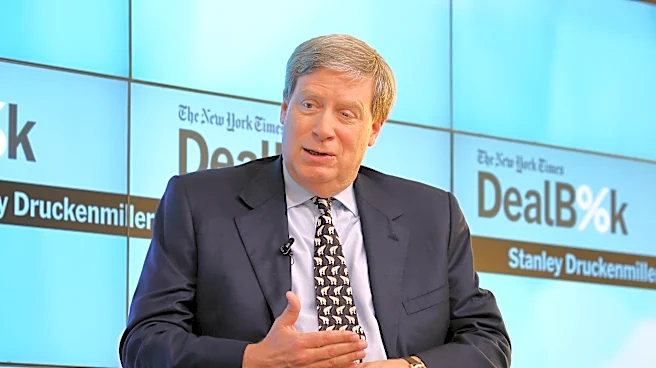
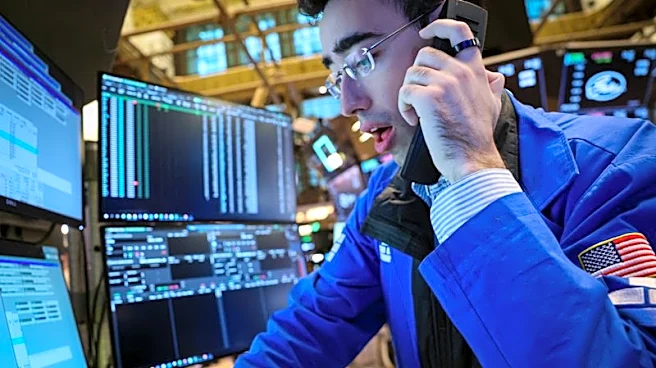
Stanley Druckenmiller, chairman of Duquesne Family Office and a notable investor, announced on the 17th that he is taking a break from stock investments. This statement came three days before a significant downturn in the U.S. tech market. On the 20th,
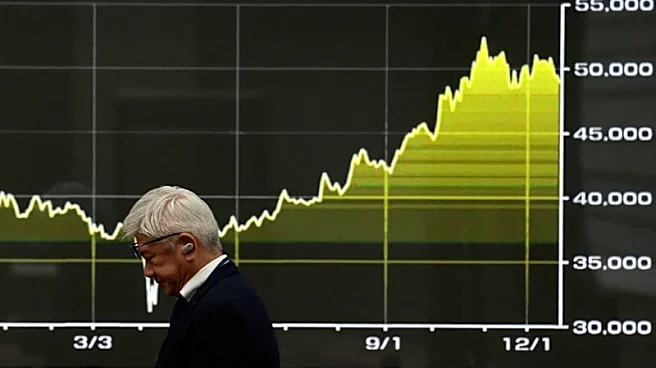
the Nasdaq index, heavily weighted with U.S. tech stocks, plummeted by 1,261.47 points (5.28%), closing at 22,617.73. This marks the second drop of over 5% in the month, following a 5.5% decline on the 5th. The recent plunge has erased all gains made by the Nasdaq this year, with its closing price on the 20th being 2.7% lower than its year-end 2023 level. The S&P 500 index also experienced a 3.7% fall and has entered a 'correction' phase, having dropped 11.6% from its peak on September 6. Even AI-related stocks, such as Anthropic, which debuted on Nasdaq on the 19th, saw a significant decline of 8.5% the day after its initial surge.
Why It's Important?
The decision by a prominent investor like Stanley Druckenmiller to step away from stock investments signals growing caution among financial leaders regarding the current market conditions. His move, preceding a substantial tech stock sell-off, could influence other investors to re-evaluate their portfolios, potentially exacerbating market volatility. The sharp decline in the Nasdaq, erasing all year-to-date gains, indicates a significant shift in investor sentiment, particularly concerning the technology sector. This downturn affects not only individual investors but also institutional funds and pension plans with exposure to U.S. tech stocks. The broader market correction, as seen with the S&P 500, suggests a widespread re-pricing of assets, driven by factors such as current interest rates, which, according to Bryce Doty of Sit Investment Associates, make bonds more attractive than stocks. This environment could lead to a reallocation of capital away from equities, impacting corporate valuations and future investment in innovation.
What's Next?
The immediate future may see continued volatility in the U.S. stock market, especially within the tech sector, as investors react to the recent downturn and the cautious stance of figures like Druckenmiller. Market analysts will closely monitor interest rate policies and economic indicators for signs of stabilization or further contraction. Companies heavily reliant on investor confidence and capital for growth, particularly in the AI space, might face increased scrutiny and pressure. There could be a shift in investment strategies, with a potential move towards more conservative assets like bonds, as suggested by current market commentary. Government bodies and financial regulators may also increase their monitoring of market conditions, though no specific interventions have been indicated. The performance of major indices like the Nasdaq and S&P 500 in the coming weeks will be crucial in determining whether the current correction deepens or if a recovery begins.
Beyond the Headlines
The current market turbulence, highlighted by Druckenmiller's withdrawal and the tech stock sell-off, points to deeper concerns about market valuations and the sustainability of growth in certain sectors. The rapid rise and subsequent fall of AI-related stocks, such as Anthropic, suggest a potential speculative bubble in emerging technologies, where initial public offerings may be overvalued. This situation could lead to a more discerning approach from investors towards new tech ventures, demanding clearer paths to profitability rather than just growth potential. Furthermore, the broader economic context, including interest rate environments, plays a critical role in shifting investment paradigms. A prolonged period of higher interest rates could fundamentally alter how investors perceive risk and return, potentially leading to a re-evaluation of long-term investment strategies across various industries. This could also trigger a broader discussion on the role of central bank policies in market stability and asset pricing.