
What's Happening?
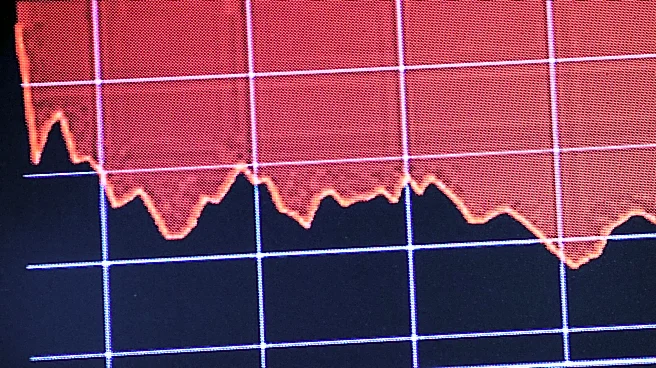
Nvidia's stock (NVDA) experienced volatility on Friday, closing up 0.8% at 150.49 after reversing earlier losses. This fluctuation occurred amidst investor concerns regarding negative headlines for the
AI chipmaker. Key factors contributing to investor apprehension include curtailed sales in Southeast Asia and the upcoming congressional testimony of CEO Jensen Huang. Additionally, S&P Global Ratings placed Nvidia's AA ratings on CreditWatch with negative implications on Wednesday, further adding to market uncertainty. The company, a leading provider of AI chips, is facing scrutiny over its market position and future sales prospects in a dynamic global environment.
Why It's Important?
The wavering of Nvidia's stock is significant for the U.S. technology sector, particularly for companies heavily invested in artificial intelligence. Nvidia's role as a dominant AI chipmaker means that any challenges it faces, whether from regulatory scrutiny or market shifts, can have ripple effects across the industry. Curtailed sales in Southeast Asia could signal broader geopolitical or economic pressures affecting global supply chains and market access for U.S. tech firms. CEO Jensen Huang's congressional testimony is crucial as it could shed light on the company's strategies, market practices, and potential regulatory impacts, influencing investor confidence and future policy decisions related to AI and semiconductor manufacturing. The CreditWatch negative rating from S&P Global Ratings also indicates potential concerns about the company's financial stability or future growth trajectory, which could affect its borrowing costs and overall market perception.
What's Next?
The upcoming congressional testimony by CEO Jensen Huang will be a critical event for Nvidia and the broader AI industry. Investors and analysts will be closely monitoring his statements for insights into the company's operational strategies, responses to market challenges, and outlook on regulatory environments. The outcome of this testimony could influence investor sentiment and potentially impact Nvidia's stock performance in the short term. Furthermore, the situation regarding curtailed sales in Southeast Asia will require ongoing attention, as it could indicate evolving market dynamics or trade policies that might affect other U.S. technology companies. The CreditWatch negative status from S&P Global Ratings suggests that the company's financial health and future prospects will be under increased scrutiny, potentially leading to further rating adjustments depending on upcoming developments and financial disclosures.
Beyond the Headlines
The challenges faced by Nvidia, including sales curtailments and congressional scrutiny, underscore the increasing intersection of technology, geopolitics, and regulation. As AI becomes more central to national economies and security, governments are likely to exert greater influence over the production and distribution of critical technologies like AI chips. This could lead to more complex operating environments for U.S. tech giants, requiring them to navigate diverse international trade policies and domestic regulatory frameworks. The focus on Southeast Asia sales also highlights the growing importance of emerging markets for tech companies and the potential for regional economic shifts to impact global leaders. Ultimately, how Nvidia addresses these multifaceted challenges could set precedents for how other U.S. technology companies manage similar pressures in an increasingly interconnected and regulated world.