




What's Happening?
A comprehensive guide explains the concept of a sales funnel, detailing its stages, practical examples, and how businesses can construct one effectively, while also advising consumers on how to recognize and navigate them. A sales funnel describes the customer's
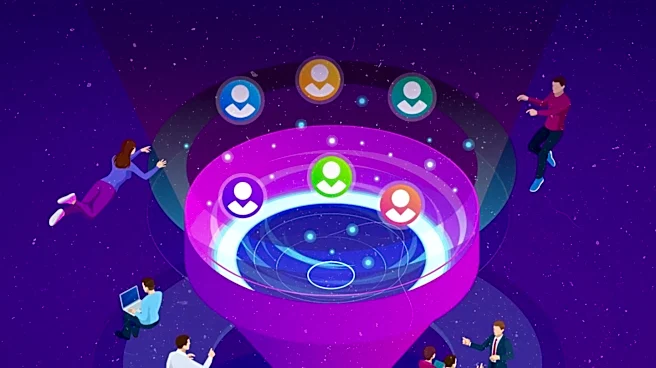
journey from initial product discovery to purchase and subsequent loyalty. It is typically divided into six stages: Awareness, Interest, Consideration, Intent, Purchase, and Loyalty. Each stage represents a different point in the customer's decision-making process, with the funnel shape illustrating that customers drop off at various points. The guide highlights that while the concept has existed for over a century, online platforms allow for precise measurement at each step, transforming the funnel into a practical tool for optimization. It differentiates a sales funnel, which focuses on the customer's perspective, from a sales pipeline, which tracks the sales team's progress with deals. The article also provides a step-by-step process for building a sales funnel, starting with defining an ideal customer and choosing entry channels, through to nurturing leads and ensuring an easy purchase process.
Why It's Important?
Understanding the sales funnel is critical for U.S. businesses, particularly those operating online, as it provides a structured framework for converting potential customers into loyal patrons. By meticulously tracking customer behavior at each stage, businesses can identify bottlenecks and optimize their marketing and sales efforts, leading to increased conversion rates and revenue. This systematic approach helps in allocating resources more efficiently, ensuring that marketing messages are tailored to the customer's current stage in the journey. For consumers, recognizing the mechanics of a sales funnel empowers them to make more informed purchasing decisions, protecting them from manipulative tactics like artificial urgency or exaggerated social proof. This knowledge fosters a more transparent marketplace, where consumers can distinguish genuine value from persuasive marketing ploys. Ultimately, a well-constructed sales funnel contributes to business growth and customer satisfaction, which are vital for a healthy economy.
What's Next?
Businesses are expected to increasingly adopt and refine their sales funnel strategies, leveraging data analytics to gain deeper insights into customer behavior. This will involve continuous testing and adjustment of various elements within the funnel, such as lead magnets, email nurturing sequences, and checkout processes, to maximize efficiency and conversion. The emphasis on customer loyalty suggests a growing trend towards post-purchase engagement, with businesses investing more in customer support, follow-up communications, and reward programs to encourage repeat business. For consumers, increased awareness of sales funnel tactics may lead to a demand for greater transparency from businesses, potentially influencing regulatory bodies to scrutinize marketing practices that employ deceptive urgency or social proof. The ongoing evolution of digital marketing tools will likely offer more sophisticated ways to build, manage, and analyze sales funnels, further integrating them into core business operations.
Beyond the Headlines
The widespread adoption and sophistication of sales funnels have profound implications for the digital economy and consumer psychology. On one hand, they represent a highly efficient mechanism for businesses to connect with and serve their target audience, driving economic activity and innovation. On the other hand, the psychological manipulation inherent in some funnel tactics raises ethical questions about consumer autonomy and informed consent. The guide's advice for consumers to recognize these tactics highlights a growing need for digital literacy in an increasingly commerce-driven online world. This dynamic interplay between business efficiency and consumer protection could lead to new industry standards or even regulatory frameworks aimed at ensuring fair and transparent online selling practices. The long-term impact could be a more discerning consumer base and a business environment that prioritizes genuine value and trust over short-term persuasive techniques, fostering a healthier and more sustainable digital marketplace.