




What's Happening?
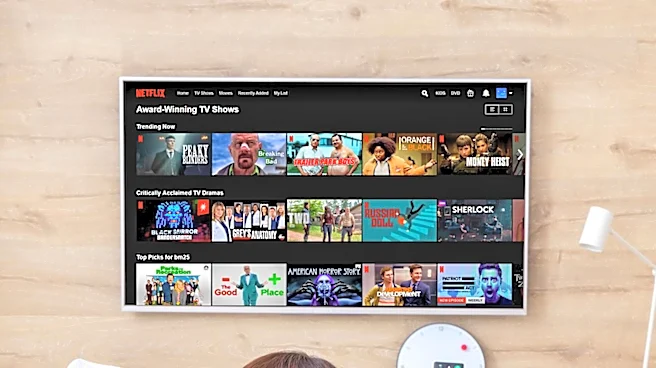
Netflix has found success with its new comedy series, 'Minimum Wage,' which features short episodes ranging from 12 to 20 minutes. This series, created by Jeremy Garelick and Will Phelps' American High, debuted in October with 14 episodes and quickly
reached Netflix's global top ten charts, accumulating 2.4 million views. The show's concise episode length is a deliberate creative choice, with Netflix specifically requesting episodes to be a minimum of twelve and a half minutes. This approach contrasts with the trend of longer episodes seen in many streaming dramas and dramedies, moving away from the traditional 22-minute broadcast sitcom format. The creators, Garelick and Phelps, adapted their writing process to fit these shorter durations, emphasizing efficiency and engaging content for audiences with increasingly short attention spans. Other streaming platforms are also exploring this format, with shows like Shane Gillis’ Netflix comedy series 'Tires' and HBO Max’s 'The Big Bang Theory' spinoff 'Stuart Fails To Save The Universe' also featuring shorter runtimes.
Why It's Important?
The success of 'Minimum Wage' and similar short-episode sitcoms on platforms like Netflix signifies a potential shift in the streaming industry's content strategy. This trend directly addresses the evolving consumption habits of audiences, particularly those influenced by short-form content on platforms like TikTok and Instagram. By offering concise, fast-paced episodes, streamers aim to capture and retain viewers who may be disengaged by longer formats. This could lead to a broader adoption of shorter episode lengths across various genres, impacting how shows are written, produced, and marketed. For creators, it presents both a challenge and an opportunity: adapting traditional storytelling to a more condensed format while potentially reaching a wider, more diverse audience. The economic implications are also significant, as shorter episodes can be more cost-effective to produce, potentially allowing for more content volume and experimentation. This shift could redefine the standard for episodic television, moving away from broadcast-era constraints and towards a model optimized for digital consumption.
What's Next?
The creators of 'Minimum Wage' have already shot additional episodes, with 14 more expected to air in spring 2027, either as a continuation of the first season or as a second season. They also have approximately 50 more draft scripts, indicating a long-term commitment to this short-episode format. American High is actively developing more projects using a similar model, leveraging their YouTube channels, such as American High Shorts (over 4.5 million subscribers) and College Life (over 1 million subscribers), to incubate ideas and build a fanbase before transitioning to streaming platforms. This strategy suggests a future where content development is more integrated with social media and online communities, allowing creators to test concepts and engage audiences early. The industry will likely observe the performance of 'Minimum Wage' and other short-form series closely to determine the viability and scalability of this model, potentially leading to more streaming services adopting similar strategies to cater to modern viewing preferences.
Beyond the Headlines
The rise of short-episode sitcoms like 'Minimum Wage' reflects a deeper cultural shift in attention spans and content consumption, driven by the pervasive influence of social media. This trend challenges traditional notions of narrative structure and character development in television, pushing creators to deliver impactful storytelling within tighter timeframes. The emphasis on 'no fat' in episodes suggests a move towards highly concentrated, engaging content that prioritizes immediate gratification. This could lead to a re-evaluation of what constitutes a 'complete' story arc in episodic television. Furthermore, the integration of social media platforms for content incubation, as practiced by American High, blurs the lines between amateur and professional content creation, potentially democratizing access to the streaming industry. This evolution could foster a new generation of creators who are adept at crafting compelling, bite-sized narratives, fundamentally altering the landscape of television production and audience engagement.