





What's Happening?
Mexico continues to be a top vacation spot for celebrities, musicians, and business leaders, known for its beaches, cuisine, and welcoming culture. Destinations like Los Cabos, Punta Mita, Tulum, and Cancun are highlighted as celebrity favorites. Los Cabos is recognized
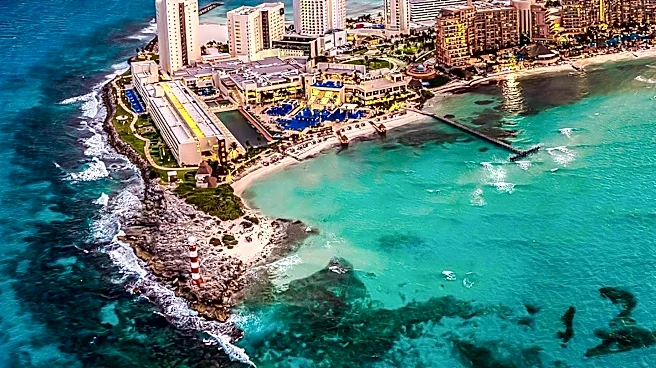
for its golf courses, luxury resorts, desert landscapes, and access to the Sea of Cortez, with yacht cruises being a signature experience. Punta Mita offers a private Pacific Coast escape with quiet beaches and a slower pace. Tulum attracts artists and creative travelers with its wellness focus, yoga, beaches, and jungle experiences, including cenotes and archaeological ruins. Cancun remains a reliable choice due to its proximity to Isla Mujeres, cenotes, Mayan sites, and natural landscapes, with all-inclusive resorts enhancing the experience. The article emphasizes that a luxury vacation in Mexico doesn't require a celebrity-sized budget, but rather smart planning, such as booking flights early, traveling during off-peak seasons, and choosing accommodations that include many services.
Why It's Important?
This trend signifies a shift in the perception of luxury travel, making high-end experiences more attainable for a broader range of U.S. travelers. By demonstrating that careful planning and strategic choices can unlock celebrity-style vacations without exorbitant costs, the travel industry can appeal to a larger demographic. This approach encourages more U.S. citizens to explore international destinations, potentially boosting tourism-related businesses and local economies in Mexico. The emphasis on all-inclusive resorts and off-peak travel also highlights evolving consumer preferences for value and convenience, which could influence how travel packages are marketed and structured in the future. For U.S. travelers, it means more accessible options for premium getaways, fostering cultural exchange and personal enrichment.
What's Next?
Travel providers and destinations are likely to further adapt their offerings to cater to this demand for 'affordable luxury.' This could involve more flexible package deals, increased promotion of shoulder-season travel, and enhanced all-inclusive options that bundle services to simplify planning and budgeting. Marketing efforts may increasingly focus on the 'experience' rather than just the 'cost,' highlighting the value of relaxation and immersion over strict itineraries. Travelers can expect to see more resources and tips on how to achieve luxury experiences on a budget, encouraging them to research and plan their trips more strategically. The continued popularity of Mexico as a destination, coupled with these accessible luxury strategies, suggests a sustained interest in high-quality, yet cost-effective, international travel among U.S. consumers.
Beyond the Headlines
The concept of 'affordable luxury' in travel reflects a broader societal value shift towards experiential consumption and smart spending. It challenges the traditional notion that luxury is exclusively for the ultra-wealthy, democratizing access to premium experiences. This trend also underscores the importance of time and presence as ultimate luxuries, suggesting that disconnecting and enjoying the moment are more valuable than simply checking off attractions. Ethically, it promotes more sustainable tourism practices by encouraging off-peak travel, which can help distribute tourist impact more evenly throughout the year and reduce strain on popular sites during peak seasons. Culturally, it fosters a deeper appreciation for destinations like Mexico, moving beyond superficial tourism to encourage more immersive and thoughtful engagement with local cultures and environments.