





What's Happening?
KeyCorp, a Cleveland-based regional bank, is actively engaged in the U.S. Treasury market through its capital markets and government securities activities. While a significant portion of its revenue stems from traditional banking relationships and fee
income, the bank's performance is also influenced by federal borrowing costs and fixed income flows. KeyCorp generates approximately US$3.6 billion from its Consumer Bank and US$3.9 billion from its Commercial Bank, operating exclusively within the United States, and holds a market value of around US$21.3 billion. The bank is anticipating a shift from net interest income headwinds to tailwinds, with over US$9 billion of low-yielding fixed-rate assets expected to reprice in the latter half of 2026 and an additional US$30 billion through the end of 2027. This repricing is projected to move the net interest margin from 2.89% towards at least 3.25%, potentially boosting revenue and earnings. The impact of unforeseen pressures on these repricing assumptions could significantly affect KeyCorp's financial outlook.
Why It's Important?
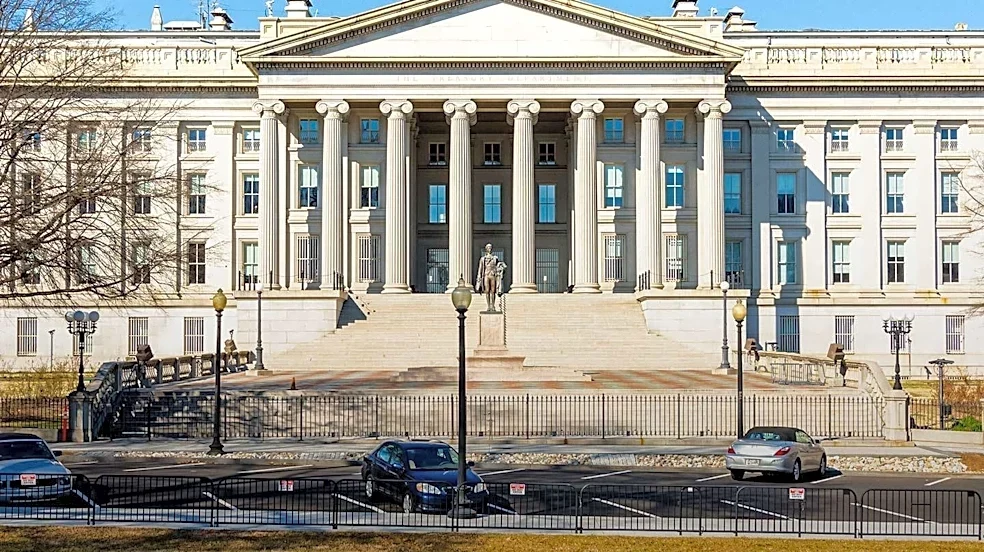
The dynamics of the U.S. Treasury market, particularly rising federal borrowing costs, have a direct impact on financial institutions like KeyCorp. For investors, KeyCorp offers a lens through which to observe how these costs ripple through funding markets, affecting traditional lenders that also participate in capital markets and fixed income. The anticipated repricing of a substantial volume of KeyCorp's fixed-rate assets presents a critical juncture. A successful repricing could lead to an increase in net interest margin, directly translating to higher revenue and earnings for the bank. Conversely, any unexpected shifts in interest rate trends or market conditions that negatively impact these repricing assumptions could pose significant challenges, potentially bending margins in the opposite direction. This situation highlights the sensitivity of regional banks with capital market exposure to broader macroeconomic factors and government fiscal policies.
What's Next?
KeyCorp's financial performance in the coming years will largely depend on the successful repricing of its low-yielding fixed-rate assets. With over US$9 billion set to reprice in late 2026 and US$30 billion by the end of 2027, the bank's ability to achieve its projected net interest margin increase will be closely watched. Investors and analysts will be monitoring interest rate developments and the broader economic environment for any signs that could accelerate or stall this repricing process. The bank's management will need to effectively navigate potential unseen pressures that could impact these assumptions. Furthermore, KeyCorp's continued focus on its Consumer and Commercial Bank segments, alongside its capital markets activities, will be crucial in maintaining its market position and achieving its financial targets amidst evolving market conditions.
Beyond the Headlines
The situation at KeyCorp underscores a broader trend in the financial sector where banks are increasingly exposed to the volatility of government debt markets. While traditional banking activities remain core, the interplay with capital markets and government securities introduces complex risks and opportunities. The emphasis on repricing fixed-rate assets highlights the long-term implications of interest rate cycles on bank profitability and stability. This scenario also brings to light the intricate balance banks must strike between managing their core lending and deposit-taking functions and participating in more complex financial instruments. The success or failure of KeyCorp in leveraging these repricing opportunities could serve as a case study for other regional banks facing similar pressures from the U.S. Treasury market, influencing their strategic decisions regarding asset-liability management and capital allocation.