





What's Happening?
Prologis, a global leader in logistics real estate, is expanding its services beyond traditional property leasing through its 'Prologis Essentials' platform. This initiative aims to transform Prologis into a strategic operations partner for its customers
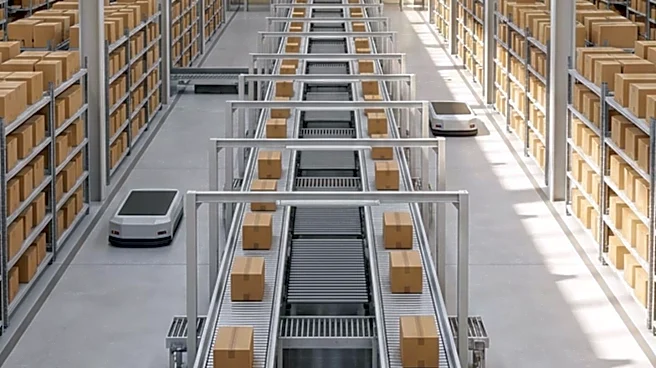
by offering integrated, turnkey intralogistics solutions. These solutions cover the entire lifecycle of warehouse operations, from initial setup and move-in to ongoing optimization and eventual move-out. Prologis Essentials provides critical infrastructure such as racking, energy systems, material handling, and office fit-outs through a coordinated network of partners. By combining commercial, technical, and project delivery capabilities, Prologis seeks to simplify the process for customers, accelerate timelines, and improve operational outcomes. The company, founded in 1983 and headquartered in San Francisco, CA, operates in the real estate industry and is listed on the NYSE under the ticker symbol PLD. Prologis works with major manufacturing and distribution companies like Amazon, BMW, DHL, FedEx, and Pepsi, managing approximately 72 million square meters of property across 19 countries.
Why It's Important?
This strategic shift by Prologis is significant for the U.S. logistics and supply chain sectors. By offering comprehensive, integrated solutions, Prologis is addressing a growing need among businesses for streamlined and efficient warehouse operations. Companies often face complexities in coordinating multiple vendors for different aspects of warehouse infrastructure and operations. Prologis Essentials aims to alleviate this by providing a single, accountable partner, which can lead to reduced operational costs, faster deployment of facilities, and improved overall supply chain efficiency. This move could set a new standard in the logistics real estate industry, pushing competitors to offer more value-added services beyond just physical space. For businesses, this means potentially greater operational agility and a more integrated approach to managing their distribution networks, which is crucial in today's fast-paced e-commerce environment. The initiative also highlights the increasing convergence of real estate and technology in optimizing industrial operations.
What's Next?
Prologis is expected to continue expanding the reach and capabilities of its Essentials platform, likely focusing on integrating more advanced technologies such as automation and AI into its intralogistics solutions. The company's emphasis on providing a full lifecycle service suggests a long-term commitment to becoming an indispensable operational partner for its clients. This could lead to increased market share in the logistics solutions sector and deeper relationships with existing customers. Competitors in the logistics real estate market may respond by developing similar integrated service offerings to remain competitive. Furthermore, as Prologis refines its go-to-market approach and scales the business, there could be further acquisitions or partnerships with technology providers to enhance its suite of services. The success of this model could also influence how other commercial real estate sectors approach value-added services for their tenants.
Beyond the Headlines
The expansion of Prologis into integrated operational solutions reflects a broader trend in the commercial real estate industry where landlords are moving beyond simply providing space to offering comprehensive, value-added services. This shift is driven by the increasing complexity of modern supply chains and the demand for greater efficiency and resilience. Ethically, this approach could lead to more sustainable warehouse operations as Prologis integrates energy systems and optimized material handling. Legally, it may necessitate new contractual frameworks that cover both real estate and operational services. Culturally, it signifies a move towards a more collaborative ecosystem where real estate providers become integral to their clients' core business processes. This evolution could fundamentally alter the landlord-tenant relationship, transforming it into a more strategic partnership focused on mutual operational success and long-term value creation.