





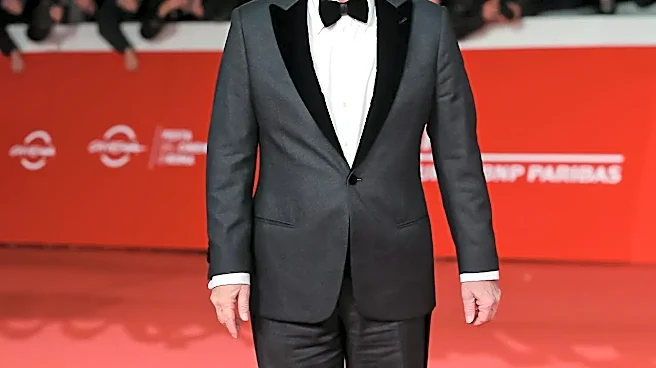


What's Happening?
Tippett Studio, the visual effects house founded by legendary VFX pioneer Phil Tippett, has clarified that it is not shutting down, despite reports of its Berkeley facility being emptied through an estate sale. The studio issued an official statement
explaining that while they are leaving their long-time Berkeley location, they will continue their visual effects and animation work across film, television, and entertainment. The company stated that maintaining a large permanent physical space is no longer necessary for their current production needs, and they will collaborate with outside facilities for specialized infrastructure when required. Phil Tippett, 74, has personally stepped away from the 'Hollywood machine,' but the studio bearing his name will persist. The estate sale included iconic pieces from Hollywood history, such as models, posters, and equipment from films like 'Star Wars' and 'Jurassic Park.' Tippett confirmed he is keeping his two Oscars for 'Return of the Jedi' and 'Jurassic Park.' The studio's Canadian operations, including its Toronto studio, are also continuing and are currently working on a large feature film.
Why It's Important?
This clarification from Tippett Studio is crucial for the visual effects industry and its historical legacy. Initial reports of the studio's closure caused concern, given its significant contributions to iconic films like 'Star Wars,' 'Jurassic Park,' and 'RoboCop.' The studio's evolution to a more flexible, project-based physical footprint reflects a broader trend in the visual effects industry, where remote work and specialized collaborations are becoming more common. This shift allows companies to adapt to changing production demands and technological advancements without the overhead of a large, permanent facility. For the U.S. entertainment industry, it signifies a move towards more agile production models. While Phil Tippett's personal retirement from the 'Hollywood machine' marks the end of an era for his direct involvement, the continuation of Tippett Studio ensures that its legacy of innovation in stop-motion and visual effects will endure, influencing future generations of filmmakers and artists.
What's Next?
Tippett Studio will continue its visual effects and animation work, operating with a more distributed and flexible model. This means future projects will likely involve collaborations with external facilities for specific needs like stages, fabrication, and motion-control photography. The studio's Canadian operations will also continue to be active, with a large feature film currently in production in Toronto. The industry will observe how this new operational model impacts the studio's output and its ability to maintain its reputation for groundbreaking visual effects. The estate sale of historical artifacts from the Berkeley facility marks a physical end to one chapter, but the studio's commitment to ongoing projects indicates a strategic adaptation rather than a cessation of operations. This transition could serve as a case study for other legacy VFX houses considering similar operational shifts in response to evolving industry landscapes.
Beyond the Headlines
The story of Tippett Studio's operational shift highlights a deeper transformation within the visual effects industry. The move away from large, permanent physical spaces towards a more project-centric, collaborative model reflects the increasing digitalization of VFX work. While stop-motion remains a core capability, the emphasis on digital tools and remote collaboration means that physical infrastructure is less critical than it once was. This evolution also touches upon the preservation of cinematic history; the estate sale, while necessary for the studio's transition, disperses valuable physical artifacts that represent decades of innovation. This raises questions about how the industry will collectively preserve the tangible history of visual effects as production processes become increasingly digital and decentralized. Phil Tippett's personal decision to step back also underscores the generational shift occurring in Hollywood, where pioneers of practical effects are gradually ceding the stage to new technologies and methodologies, even as their creative legacies continue to inspire.